

NOTICE: All orders and payments must be made through our Our the Links in Contact page. Avoid paying to any third-party user claiming to us
What Are Bank Logs? How Scammers Operate and How to Stay Safe

Table of Contents
ToggleIntroduction
If you’ve spent any time browsing cybersecurity forums, Telegram groups, Reddit threads, or dark web discussions, you’ve probably come across the term “bank logs.” The phrase sounds technical and harmless at first glance, but it’s closely tied to online banking fraud, identity theft, phishing schemes, and financial cybercrime.
A lot of people searching for information about bank logs aren’t criminals. They’re curious. Some are trying to understand how scams happen. Others want to protect themselves after receiving suspicious emails or noticing strange banking activity. Some simply want to know why this topic keeps appearing online.
The problem is that most articles either oversimplify the issue or dive into technical jargon without explaining what actually matters to ordinary people.
This guide fixes that.
You’ll learn what bank logs are, how cybercriminals obtain them, the scams surrounding them, the risks involved, the legal consequences, and most importantly, how to protect yourself from becoming a victim of online banking fraud.
By the end, you’ll understand not only how these schemes work, but also why awareness is your strongest defense.
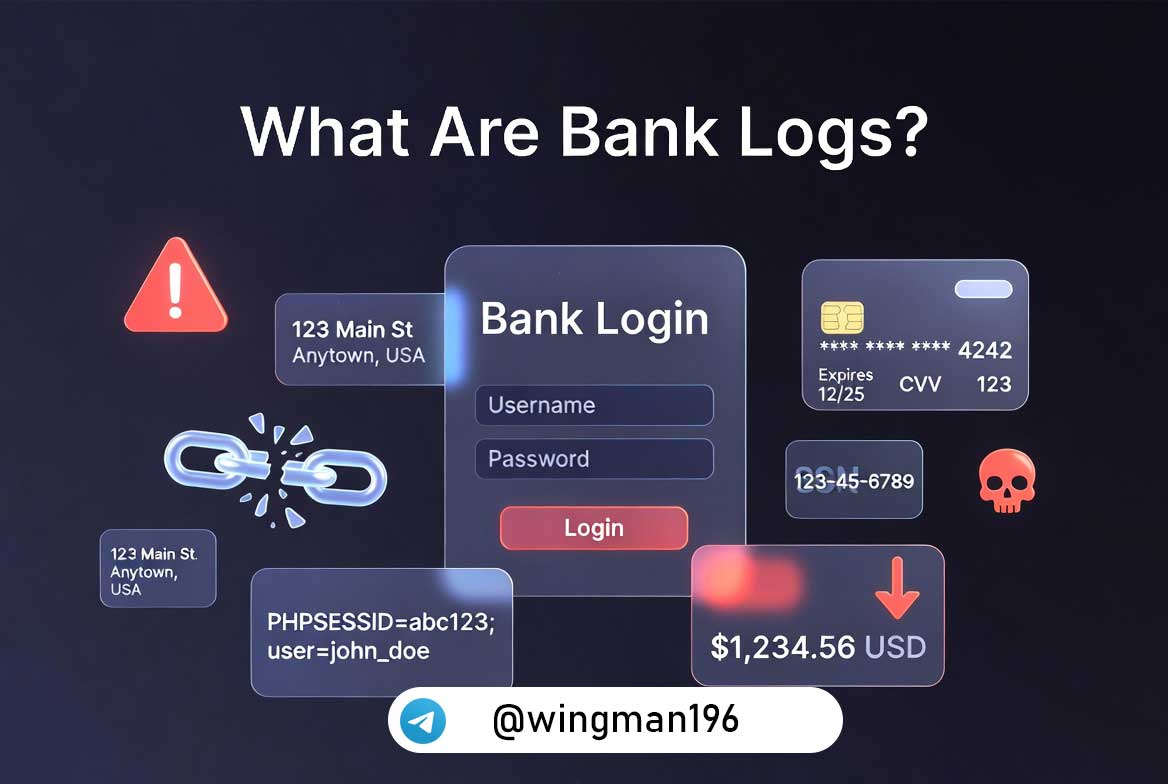
What Are Bank Logs?
The term “bank logs” generally refers to stolen online banking credentials and related account information. In cybercrime communities, the phrase often includes:
- Online banking usernames
- Passwords
- Session cookies
- Account balances
- Linked email addresses
- Personal identification data
- Two-factor authentication information in some cases
In simple terms, bank logs are unauthorized access details that allow criminals to attempt entry into someone’s online banking account.
These credentials are usually stolen through cyberattacks rather than “hacked directly” from a bank’s infrastructure. Most attacks target individuals instead of banks themselves.
That distinction matters.
Modern banks spend billions on cybersecurity. Criminals often go after the weakest point in the chain: everyday users.
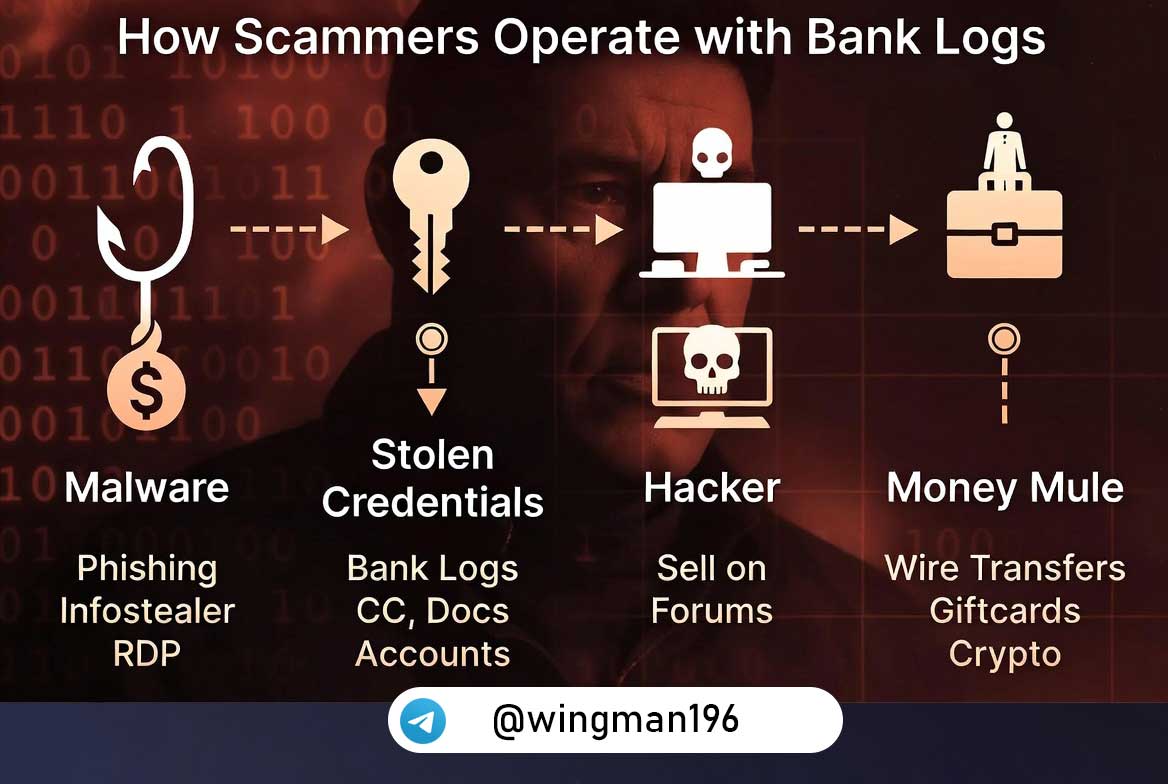
How Criminals Obtain Bank Logs
Understanding how these credentials are stolen is essential if you want to avoid becoming a victim.
Phishing Attacks
Phishing remains one of the most common methods.
You receive an email or text message pretending to be from your bank. It may claim:
- Your account has been locked
- Suspicious activity was detected
- You must verify your identity
- A payment failed
- Your account will be suspended
The message includes a fake login page designed to look identical to your bank’s website. Once you enter your credentials, scammers capture them instantly.
Many phishing sites today are surprisingly convincing. Some even use cloned branding, HTTPS certificates, and realistic domain names.
Malware and Banking Trojans
Malware is another major source of stolen banking information.
A user unknowingly downloads malicious software through:
- Fake software installers
- Pirated applications
- Cracked games
- Email attachments
- Fake browser updates
- Malicious ads
Once installed, banking malware can:
- Record keystrokes
- Steal saved passwords
- Capture screenshots
- Hijack browser sessions
- Intercept login credentials
Advanced banking trojans can even bypass some authentication systems by manipulating sessions in real time.
Credential Stuffing
Many people reuse passwords across multiple websites.
When unrelated websites suffer data breaches, criminals test leaked email/password combinations against banking platforms. This is called credential stuffing.
If you reuse passwords, one compromised account can lead to multiple security failures.
Fake Investment and Crypto Platforms
Some scams combine fake investments with banking credential theft.
Victims are encouraged to:
- Link bank accounts
- Upload identity documents
- Connect debit cards
- Authorize transactions
These platforms often disappear after collecting sensitive financial information.
Social Engineering
Not every attack involves sophisticated hacking.
Some scammers simply manipulate victims psychologically.
They may pretend to be:
- Bank employees
- Technical support agents
- Government officials
- Fraud investigators
Their goal is to pressure victims into revealing account details voluntarily.
Why Bank Logs Are Dangerous
The danger goes far beyond unauthorized account access.
Financial Theft
The most obvious risk is direct theft.
Criminals may:
- Transfer funds
- Make online purchases
- Open fraudulent accounts
- Withdraw money through intermediaries
- Use accounts for money laundering
Identity Theft
Banking credentials are often connected to broader identity data.
Once criminals gain enough information, they may:
- Apply for loans
- Commit tax fraud
- Open credit accounts
- Conduct SIM swap attacks
- Steal additional online accounts
Long-Term Financial Damage
Even when victims recover stolen funds, the aftermath can be severe:
- Frozen accounts
- Credit score damage
- Legal complications
- Delayed payroll deposits
- Emotional stress
- Lost trust in digital banking
Secondary Fraud
Stolen accounts are sometimes used in larger criminal operations.
Victims can unknowingly become entangled in investigations involving:
- Money laundering
- Fraud rings
- Cryptocurrency scams
- International cybercrime networks
The Underground Market for Stolen Banking Data
One reason the term “bank logs” appears frequently online is because stolen credentials are traded in underground marketplaces.
These marketplaces may operate through:
- Dark web forums
- Encrypted messaging apps
- Fraud communities
- Illegal marketplaces
Listings often categorize accounts by:
- Country
- Bank name
- Account balance
- Login status
- Additional personal data
It’s important to understand something clearly: participating in these activities is illegal in most jurisdictions and carries serious criminal penalties.
Even possessing stolen credentials can expose someone to investigation and prosecution.
Common Bank Log Scams People Fall For
Many people searching for information about bank logs encounter scams themselves.
Ironically, scammers often scam other scammers.
“Fresh Bank Logs” Scams
Fraudsters advertise supposedly high-balance bank accounts for sale.
After payment, buyers receive:
- Fake credentials
- Expired sessions
- Empty accounts
- Non-working logins
These schemes are extremely common in cybercrime spaces.
Fake Recovery Services
Victims of online fraud are frequently targeted again.
A fake “recovery expert” promises to retrieve stolen funds for an upfront fee. Once paid, they disappear.
No legitimate recovery service guarantees stolen money recovery.
Telegram Fraud Channels
Many Telegram groups advertise:
- “Verified bank logs”
- “Fullz”
- “Fresh drops”
- “100% working accounts”
Most are scams designed to steal cryptocurrency payments from inexperienced users.
Fake Cybersecurity Tools
Scammers also distribute malware disguised as:
- Fraud tools
- Account checkers
- Credential validators
- Banking software
Users attempting illegal activity often infect themselves with malware.
Signs Your Online Banking Account May Be Compromised
Early detection can dramatically reduce damage.
Watch for these warning signs:
Unrecognized Transactions
Even small unauthorized charges matter. Criminals sometimes test accounts with tiny purchases before attempting larger theft.
Password Reset Notifications
Unexpected password reset emails may indicate someone is attempting access.
New Device Login Alerts
Many banks notify users when accounts are accessed from unfamiliar devices or locations.
Never ignore these alerts.
Missing Funds
Obvious, but sometimes overlooked during busy periods.
Locked Accounts
Banks may freeze accounts after detecting suspicious login attempts.
Strange Emails or Text Messages
Unexpected messages requesting verification codes or login confirmations are major red flags.
How Banks Detect Fraudulent Activity
Banks use increasingly advanced fraud detection systems.
Behavioral Analytics
Banks monitor:
- Login patterns
- Device fingerprints
- Typing behavior
- Transaction habits
- Geographic anomalies
If your account suddenly logs in from another country, systems may trigger alerts automatically.
Machine Learning Fraud Detection
Modern fraud systems analyze millions of transactions in real time to identify suspicious behavior patterns.
Multi-Factor Authentication
Many banks now require:
- SMS verification
- Authentication apps
- Biometric verification
- Security questions
While not perfect, these layers reduce risk significantly.
Common Mistakes People Make With Online Banking Security
This is where many security failures happen.
Reusing Passwords
This remains one of the biggest mistakes online.
If one website is breached, reused passwords become vulnerable everywhere else.
Ignoring Software Updates
Updates patch security vulnerabilities.
Delaying updates increases exposure to malware and exploitation.
Clicking Links Without Verification
Phishing succeeds because people react emotionally before thinking critically.
Always verify URLs independently.
Using Public Wi-Fi Without Protection
Unsecured public networks increase interception risks.
Saving Banking Passwords Everywhere
Browser password storage is convenient, but if a device becomes compromised, saved credentials may be exposed.
Trusting Random Financial Advice Online
Scammers exploit urgency and greed.
Any “easy money” banking scheme should immediately raise suspicion.
Myths and Misconceptions About Bank Logs
There’s a lot of misinformation online. Let’s clear up some of the biggest myths.
“Only Rich People Get Targeted”
False.
Many attacks target ordinary users because they often have weaker security practices.
“Banks Always Refund Fraud”
Not always.
Reimbursement policies vary depending on:
- User negligence
- Reporting speed
- Fraud type
- Local laws
- Investigation results
“Macs and iPhones Can’t Get Malware”
False.
While some platforms are targeted less frequently, no device is immune.
“Two-Factor Authentication Makes You Untouchable”
2FA helps enormously, but advanced phishing attacks can still bypass some methods.
“Cybercriminals Only Target Big Companies”
Individual consumers remain primary targets because attacks scale easily.
How To Protect Yourself From Online Banking Fraud
This is the section most people truly need.
Use Strong, Unique Passwords
Every banking-related account should have:
- A unique password
- Long passphrases
- No reused credentials
Password managers help enormously.
Enable Multi-Factor Authentication
Use authentication apps whenever possible instead of SMS-based verification.
Monitor Your Accounts Frequently
Check:
- Transactions
- Login alerts
- Linked devices
- Email notifications
The earlier fraud is detected, the easier recovery becomes.
Avoid Clicking Direct Banking Links
Instead of clicking links from emails or texts:
- Open your browser manually
- Type the official website yourself
- Use official banking apps
Keep Devices Updated
Update:
- Operating systems
- Browsers
- Banking apps
- Antivirus tools
Security patches matter more than people realize.
Be Careful With Downloads
Avoid:
- Pirated software
- Unknown attachments
- Suspicious browser extensions
- Fake update prompts
Use Secure Networks
Avoid logging into banking accounts on unsecured public Wi-Fi.
If necessary, use a trusted VPN.
Freeze Your Credit When Necessary
If identity theft is suspected, credit freezes can prevent fraudulent account openings.
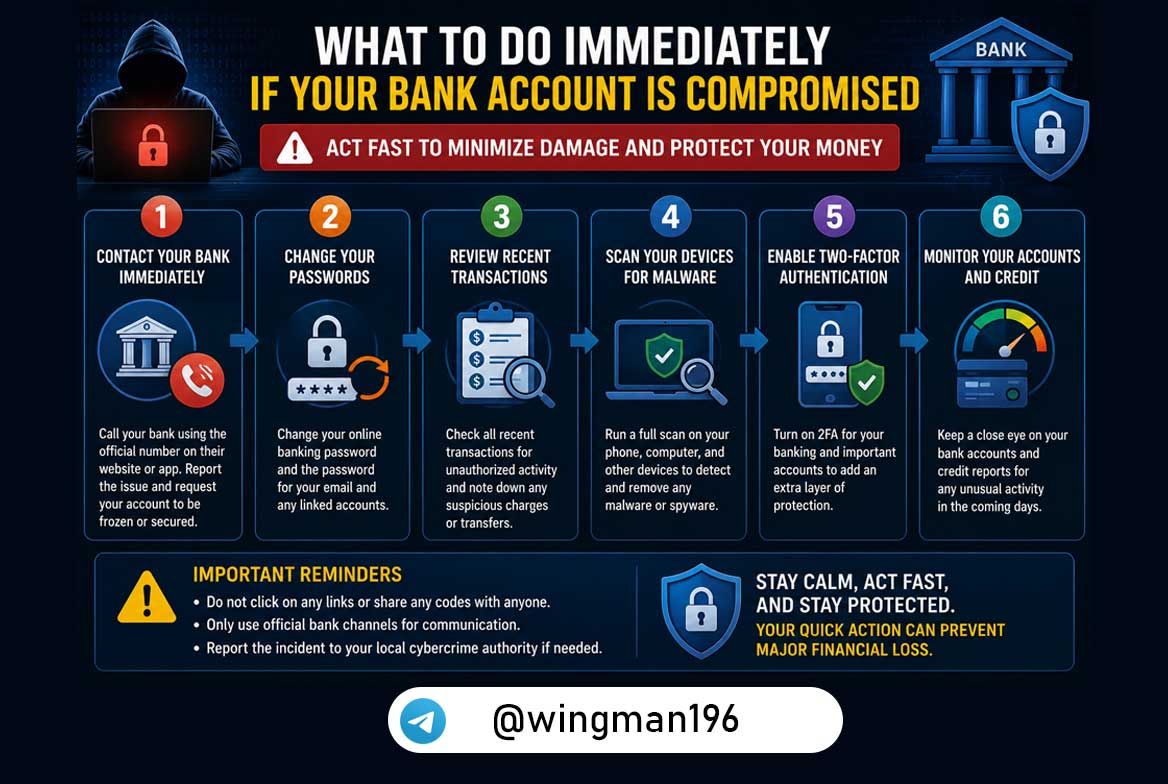
What To Do Immediately If Your Bank Account Is Compromised
Fast action can significantly reduce losses.
Contact Your Bank Immediately
Use official contact numbers only.
Request:
- Account freeze
- Password reset
- Fraud investigation
- Card suspension
Change Passwords
Update:
- Banking credentials
- Email passwords
- Connected financial services
Email security is especially critical because many password resets rely on email access.
Scan Your Devices for Malware
Use reputable antivirus and anti-malware software.
Review Recent Transactions
Document:
- Unauthorized transfers
- Suspicious charges
- Login timestamps
- Fraud notifications
Report Identity Theft
Depending on your country, report incidents to:
- Financial regulators
- Consumer protection agencies
- Cybercrime divisions
- Credit bureaus
Monitor Credit Activity
Fraud often expands beyond a single account compromise.
Awareness Matters More Than Ever
Online banking fraud is evolving rapidly.
Cybercriminals now use:
- AI-generated phishing emails
- Deepfake voice scams
- Sophisticated impersonation
- Automated credential attacks
- Social engineering tactics
The average user faces more sophisticated threats than ever before.
At the same time, digital banking continues growing globally.
That means awareness is no longer optional. It’s part of basic financial literacy.
The safest users are not necessarily the most technical people. They’re the most cautious and informed.
The Legal Consequences of Involvement in Banking Fraud
Some people searching for “bank logs” underestimate the legal risks.
Participating in activities involving stolen banking credentials can lead to:
- Criminal prosecution
- Financial fraud charges
- Identity theft charges
- Money laundering investigations
- Asset seizures
- Prison sentences
Even attempting to purchase stolen credentials may violate cybercrime laws.
Law enforcement agencies worldwide increasingly cooperate on digital financial crime investigations.
Cybercrime leaves trails. Many people wrongly assume anonymity tools guarantee protection.
They do not.
How Businesses and Banks Are Fighting Back
Financial institutions are investing heavily in fraud prevention technologies.
Advanced AI Detection Systems
Banks increasingly use AI to detect:
- Abnormal transaction patterns
- Suspicious login behavior
- Fraud rings
- Automated attacks
Biometric Authentication
Fingerprint and facial recognition add additional security layers.
Real-Time Fraud Alerts
Modern banking apps now notify users almost instantly about:
- Purchases
- Transfers
- Login attempts
- Device changes
Consumer Education Campaigns
Banks are also focusing more on fraud awareness because prevention is far cheaper than reimbursement.
FAQ: Bank Logs, Banking Fraud, and Online Security
What exactly does “bank logs” mean?
The term usually refers to stolen online banking login credentials and related account information obtained illegally through cybercrime methods.
Is it illegal to buy or sell bank logs?
Yes. In most countries, buying, selling, possessing, or using stolen banking credentials is illegal and can lead to severe criminal penalties.
Can someone hack my bank account without my password?
Sometimes. Criminals may exploit malware, session hijacking, phishing, SIM swapping, or social engineering tactics to bypass normal login procedures.
Are mobile banking apps safer than websites?
Generally, official banking apps are considered safer than browsing through random links, but security still depends heavily on user behavior and device safety.
What should I do if I clicked a suspicious banking link?
Immediately:
- Close the page
- Avoid entering credentials
- Change passwords if information was submitted
- Contact your bank
- Scan your device for malware
Can banks detect stolen credentials automatically?
Often, yes. Banks use fraud detection systems that analyze behavior patterns, locations, devices, and unusual activity.
Why do scammers target ordinary people?
Because attacks scale easily. Criminals often prefer many smaller victims over a single high-profile target.
Can two-factor authentication stop banking fraud completely?
No system is perfect, but 2FA dramatically reduces risk and should always be enabled.
How do phishing emails look so real now?
Modern scammers copy:
- Logos
- Branding
- Website layouts
- Official language
- Domain structures
Some even use AI-generated messaging to sound more convincing.
Are password managers safe for banking passwords?
Reputable password managers are generally far safer than reusing passwords or storing them insecurely.
Can malware steal banking information from phones too?
Yes. Mobile malware targeting banking apps has increased significantly in recent years.
How quickly should I report banking fraud?
Immediately. Fast reporting improves the chances of limiting financial damage and recovering stolen funds.
Conclusion
Bank logs are not just an obscure internet term. They represent a real part of the growing online banking fraud ecosystem that affects individuals, businesses, and financial institutions worldwide.
The good news is that most attacks still rely heavily on human error.
That means awareness, caution, and smart security habits remain incredibly powerful defenses.
If you remember only a few things from this guide, remember these:
- Never trust unsolicited banking messages
- Use unique passwords and multi-factor authentication
- Monitor your accounts regularly
- Keep your devices secure and updated
- Treat online financial security seriously
Cybercriminals constantly evolve their methods, but informed users are much harder targets.
In today’s digital world, protecting your banking information isn’t just about technology. It’s about vigilance, skepticism, and informed decision-making every single day.

Sora
Sora is a cybersecurity researcher and fraud prevention advocate specializing in bank logs, carding techniques, and underground cybercrime operations. Passionate about demystifying how scammers work, she delivers clear, practical safety tips to help individuals protect their finances and stay secure online.
Newsletter Updates
Enter your email address below and subscribe to our newsletter