

NOTICE: All orders and payments must be made through our Our the Links in Contact page. Avoid paying to any third-party user claiming to us
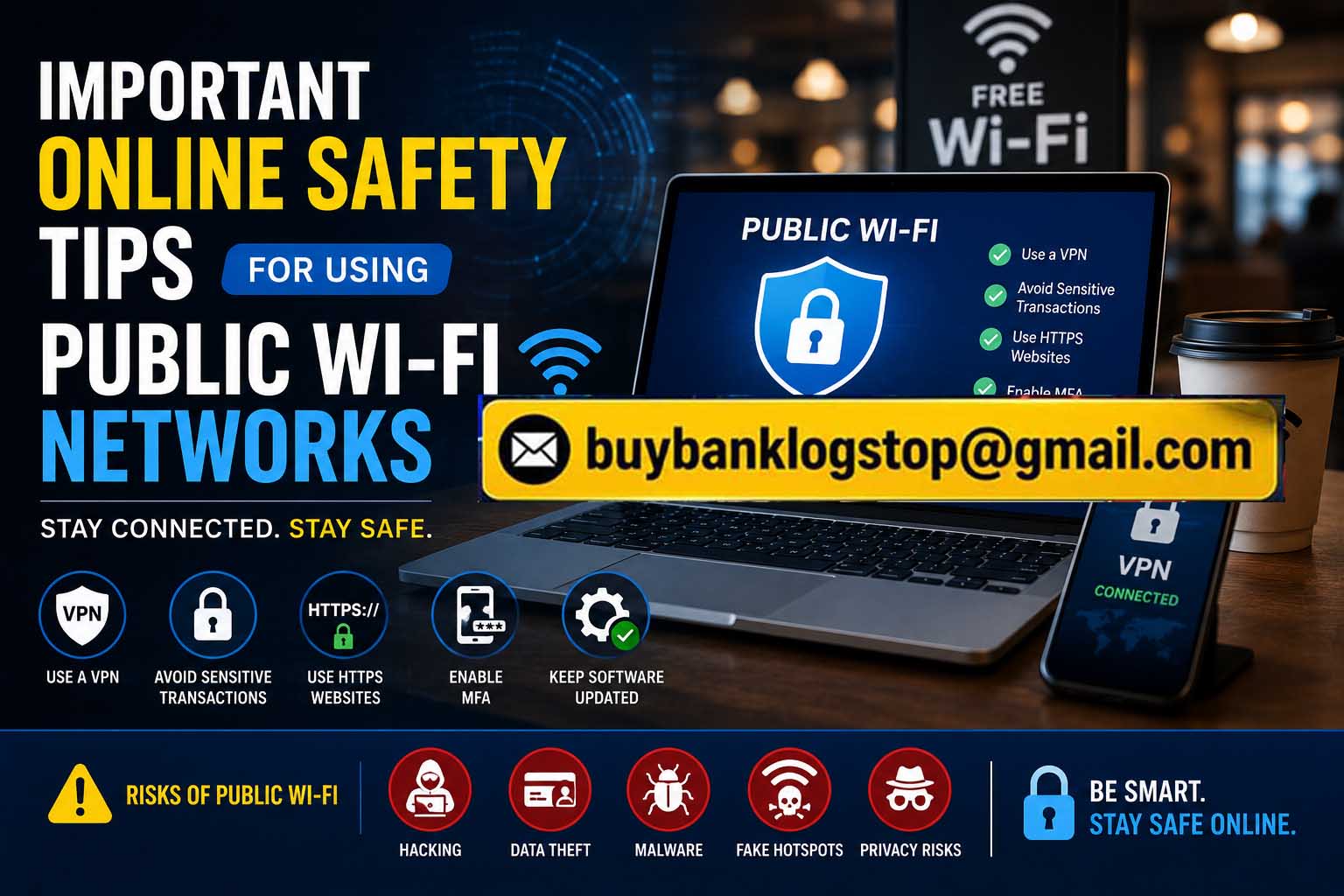
Important Online Safety Tips for Using Public Wi-Fi Networks

Secured Online Safety Tips for Using Public Wi-Fi Networks
Public Wi-Fi networks are convenient and widely available in places like airports, hotels, coffee shops, restaurants, shopping malls, and libraries. While these free internet connections make it easy to stay connected, they also expose users to serious cybersecurity threats.
Hackers often target unsecured public networks to steal passwords, banking information, emails, and personal data. Understanding the best online safety tips for using public Wi-Fi networks can help you browse securely and protect your sensitive information from cybercriminals.
In this guide, we’ll explore the biggest dangers of public Wi-Fi, common attack methods, and the most effective ways to stay safe online.
Bank login are trending cashout information scammers steal from you
Why Public Wi-Fi Networks Can Be Dangerous
Public Wi-Fi networks are usually less secure than private home or office networks. Many public hotspots lack proper encryption, making it easier for attackers to intercept data transmitted over the connection.
Cybercriminals may exploit these weaknesses to:
- Steal login credentials
- Monitor browsing activity
- Capture banking information
- Spread malware
- Hijack online sessions
- Launch phishing attacks
Because of these risks, following proper online safety tips for using public Wi-Fi networks is essential.
Common Threats on Public Wi-Fi Networks
1. Man-in-the-Middle (MITM) Attacks
In a MITM attack, hackers secretly intercept communication between your device and the website or app you’re using.
Attackers may steal:
- Passwords
- Credit card details
- Emails
- Personal messages
These attacks are especially dangerous on unsecured public networks.
2. Fake Wi-Fi Hotspots
Cybercriminals sometimes create fake hotspots with names similar to legitimate networks.
Examples include:
- “Free Airport Wi-Fi”
- “Hotel Guest Internet”
- “CoffeeShop_WiFi_Free”
Once connected, attackers can monitor your activity or redirect you to malicious websites.
Must Read: How to Identify Fake Banking Websites and Protect Your Data
3. Packet Sniffing
Hackers use packet-sniffing tools to capture data traveling through unsecured networks.
Without encryption, sensitive information can be exposed.
4. Malware Distribution
Public networks may be used to spread:
- Spyware
- Ransomware
- Trojans
- Keyloggers
Infected downloads or fake popups can compromise your device quickly.
5. Session Hijacking
Attackers may steal session cookies that keep users logged into websites.
This allows hackers to access accounts without needing passwords.
Important Online Safety Tips for Using Public Wi-Fi Networks
Use a VPN (Virtual Private Network)
A VPN encrypts your internet traffic, making it much harder for attackers to intercept your data.
Benefits of using a VPN include:
- Encrypted browsing
- Better privacy
- Safer online banking
- Protection on unsecured networks
A VPN is one of the most effective online safety tips for using public Wi-Fi networks.
Avoid Accessing Sensitive Accounts
Do not log into sensitive services on public Wi-Fi whenever possible.
Avoid accessing:
- Online banking
- Investment accounts
- Work dashboards
- Medical records
- Payment apps
If necessary, use mobile data instead.
Verify the Wi-Fi Network Name
Always confirm the official network name with staff before connecting.
Fake hotspots are designed to look legitimate.
Turn Off Automatic Wi-Fi Connections
Many devices automatically connect to previously used networks.
Disable this feature to avoid unknowingly joining malicious hotspots.
Use HTTPS Websites Only
Secure websites use HTTPS encryption to protect data.
Look for:
- HTTPS in the browser address bar
- The padlock security icon
Avoid entering passwords on websites without HTTPS protection.
Enable Multi-Factor Authentication (MFA)
MFA adds an extra layer of security by requiring additional verification beyond passwords.
Even if attackers steal your password, MFA helps prevent account access.
Keep Your Device Updated
Install updates regularly for:
- Operating systems
- Browsers
- Antivirus software
- Mobile apps
Security updates patch vulnerabilities hackers may exploit.
Disable File Sharing
Turn off file sharing and network discovery features when using public Wi-Fi.
This reduces exposure to unauthorized access.
Use Antivirus and Firewall Protection
Reliable security software can detect malware and suspicious activity on public networks.
Enable:
- Antivirus protection
- Device firewalls
- Real-time threat monitoring
Log Out After Use
Always log out of websites and apps after using them on public networks.
This reduces the risk of session hijacking.
Best Practices for Mobile Device Safety on Public Wi-Fi
Smartphones are also vulnerable on public networks.
To improve security:
- Use official apps only
- Avoid downloading unknown files
- Enable biometric authentication
- Turn off Bluetooth when not needed
- Use encrypted messaging apps
Mobile security is an important part of online safety tips for using public Wi-Fi networks.
Signs a Public Wi-Fi Network May Be Unsafe
Watch for these warning signs:
- No password protection
- Frequent popup ads
- Unexpected redirects
- Fake login pages
- Extremely slow connections
- Multiple similar hotspot names
If something feels suspicious, disconnect immediately.
Public Wi-Fi Safety for Remote Workers
Remote workers face increased cybersecurity risks when working outside the office.
Businesses should encourage employees to:
- Use corporate VPNs
- Avoid public computers
- Use encrypted cloud services
- Follow company cybersecurity policies
Cybersecurity awareness is critical for protecting sensitive business data.
How Hackers Exploit Public Wi-Fi Users
Cybercriminals often rely on users making simple mistakes, such as:
- Connecting to fake hotspots
- Ignoring HTTPS warnings
- Reusing weak passwords
- Downloading unsafe files
- Leaving devices unlocked
Understanding these tactics can help users stay more secure online.
Benefits of Practicing Safe Public Wi-Fi Habits
Following strong cybersecurity habits offers several benefits:
- Better data protection
- Reduced identity theft risk
- Safer online banking
- Increased privacy
- Improved device security
Consistently applying online safety tips for using public Wi-Fi networks can significantly reduce cyber risks.
Also Reads: How Social Engineering Manipulates Victims into Sharing Bank Details
Final Thoughts
Public Wi-Fi networks provide convenience, but they also create opportunities for cybercriminals to steal sensitive information. Understanding important online safety tips for using public Wi-Fi networks is essential for protecting your personal data, financial accounts, and online privacy.
Using a VPN, avoiding sensitive transactions, enabling MFA, verifying network names, and keeping your devices updated are all critical cybersecurity practices.
Online security starts with awareness and smart browsing habits. By staying cautious and following these public Wi-Fi safety tips, you can reduce your exposure to cyber threats and browse more safely wherever you go.
