

NOTICE: All orders and payments must be made through our Our the Links in Contact page. Avoid paying to any third-party user claiming to us
The Truth About Buying Bank Logins Online: How These Scams Really Work Exposed

Introduction to Buying Bank Logins Online
Searches related to “buy bank logins online” have exploded in recent years, fueled by underground forums, Telegram channels, fake cybercrime marketplaces, and social media hype. Many people stumble across these offers out of curiosity. Others are drawn in by promises of fast money, easy access to high-balance accounts, or so-called “verified banking logs.”
What most people don’t realize is this:
The overwhelming majority of these marketplaces are scams themselves.
Even worse, many are designed specifically to infect visitors with malware, steal cryptocurrency payments, harvest personal data, or lure users into illegal activity that can carry devastating legal consequences.
The internet is full of fake “bank login shops” claiming to sell access to online banking accounts. In reality, most of these operations are traps targeting inexperienced users, curious teenagers, desperate individuals, or people who underestimate the risks involved.
This guide breaks down how these scams work, the dangers hidden behind them, the malware threats involved, and why staying far away from these schemes is the smartest decision you can make.
What Are Fake Banking Marketplaces?
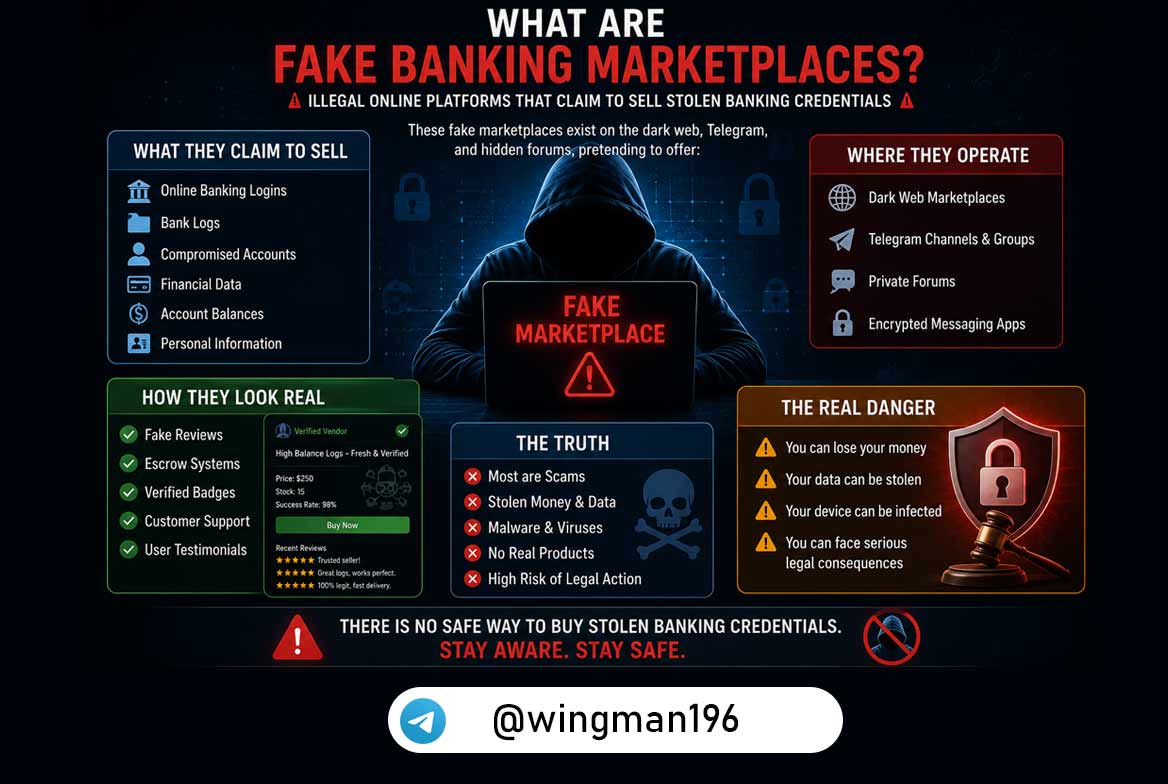
Fake banking marketplaces are websites, Telegram groups, dark web stores, or private chat channels claiming to sell:
- Online banking credentials
- “Bank logs”
- Compromised accounts
- Financial account access
- Stolen financial data
- High-balance account information
These platforms often market themselves as:
- “Secure”
- “Verified”
- “Anonymous”
- “Trusted vendors”
- “Fresh logs daily”
Some even imitate professional e-commerce websites with:
- User reviews
- Fake transaction histories
- Escrow systems
- Support chats
- Cryptocurrency payment systems
But behind the polished appearance, many are simply fraud operations targeting visitors themselves.
Why People Fall for These Schemes
Understanding the psychology behind these scams matters.
Most people who end up on these sites are influenced by:
- Curiosity
- Financial desperation
- Social media hype
- Misleading online content
- Fake success stories
- The illusion of easy money
Scammers know this.
That’s why many fake marketplaces use aggressive marketing tactics like:
- Screenshots of fake account balances
- Luxury lifestyle photos
- “Proof of withdrawals”
- Fake testimonials
- Countdown timers
- Limited-time offers
The goal is simple: create urgency and lower critical thinking.
How Scam Sites Target Users
These operations are often far more dangerous than people expect.
Fake Telegram Channels
Telegram has become one of the most common places for fraudulent “bank log” promotions.
Channels often advertise:
- “Fresh bank drops”
- “Working logs”
- “High balance accounts”
- “Instant cashout methods”
Most of these groups are scams designed to:
- Steal cryptocurrency payments
- Spread malware
- Collect personal information
- Redirect users to malicious websites
Many channels also use fake engagement bots to appear legitimate.
Clone Marketplace Websites
Some scammers build websites that imitate known underground marketplaces.
They may include:
- Fake order histories
- Fabricated user reviews
- Fake customer support
- Stolen screenshots
Victims pay cryptocurrency and receive:
- Invalid credentials
- Empty accounts
- Expired sessions
- Nothing at all
Since cryptocurrency transactions are difficult to reverse, victims often lose funds permanently.
“Verification” Scams
Some sites ask users to:
- Upload identification documents
- Verify wallets
- Submit phone numbers
- Link financial accounts
This information may later be used for:
- Identity theft
- Fraud
- SIM swapping
- Account takeovers
Fake Escrow Services
Scammers sometimes pretend to offer “safe middleman” services.
In reality, both the seller and escrow operator are often the same scammer.
The Malware Risks Most People Never Expect
This is where things become even more dangerous.
Many fake banking marketplaces are actually malware distribution hubs.
Trojanized Software Downloads
Visitors may be encouraged to download:
- “Banking tools”
- “Account checkers”
- “Crypto software”
- “Log validators”
- “Cashout tools”
These files often contain:
- Keyloggers
- Remote access trojans
- Password stealers
- Clipboard hijackers
- Spyware
Once installed, malware can silently steal:
- Banking passwords
- Browser cookies
- Saved login credentials
- Cryptocurrency wallet data
- Personal files
Clipboard Hijacking Malware
Crypto users are frequent targets.
Some malware monitors clipboard activity and automatically replaces copied wallet addresses with attacker-controlled wallets.
Victims unknowingly send cryptocurrency directly to scammers.
Browser Session Theft
Advanced malware can hijack active login sessions without even needing passwords.
This allows attackers to bypass some authentication systems entirely.
Device Surveillance
Certain malware strains can:
- Record keystrokes
- Capture screenshots
- Access webcams
- Monitor browser activity
Users exploring illegal marketplaces often become victims themselves.
Fake “Easy Money” Promises
One of the biggest warning signs is unrealistic profit claims.
Scam sites frequently promise:
- “Guaranteed profits”
- “Instant withdrawals”
- “No risk”
- “Beginner friendly”
- “Undetectable methods”
Real cybersecurity professionals know something important:
Anything involving stolen financial credentials is inherently unstable, dangerous, and illegal.
There is no “safe” version of online banking fraud.
The Legal Consequences Are Severe
This is the part many people ignore until it’s too late.
Buying, possessing, or attempting to use stolen banking credentials may violate laws related to:
- Financial fraud
- Identity theft
- Unauthorized access
- Cybercrime
- Money laundering
- Wire fraud
Depending on the jurisdiction, penalties may include:
- Heavy fines
- Asset seizure
- Frozen accounts
- Criminal prosecution
- Prison sentences
Even browsing certain marketplaces may expose users to investigations if linked to criminal activity.
Many people mistakenly believe:
- VPNs guarantee anonymity
- Crypto transactions are invisible
- Fake usernames protect identity
In reality, cybercrime investigations increasingly rely on:
- Blockchain analysis
- Device fingerprinting
- IP correlation
- Exchange KYC records
- Metadata tracking
Law enforcement agencies worldwide now cooperate extensively on financial cybercrime cases.
How Scammers Manipulate Trust
These operations survive because they understand human behavior.
Fake Social Proof
Many scam sites display:
- Fabricated testimonials
- Fake Trustpilot reviews
- Edited screenshots
- Purchased engagement
Manufactured Scarcity
Phrases like:
- “Only 3 logs left”
- “Limited access”
- “VIP buyers only”
are designed to pressure impulsive decisions.
Fake Customer Support
Some operations provide responsive support chats to appear trustworthy.
In reality, this is often part of the scam process.
Community Manipulation
Fraud groups sometimes create fake communities filled with controlled accounts pretending to be satisfied buyers.
This creates the illusion of legitimacy.
Common Myths About Buying Bank Logins Online
There’s a massive amount of misinformation online. Let’s clear up some common myths.
“Everyone Selling Logs Is Rich”
Most are scammers stealing from other scammers or inexperienced users.
“Crypto Payments Make Me Anonymous”
False.
Blockchain transactions are traceable, especially once funds touch regulated exchanges.
“I’m Too Small To Get Caught”
Law enforcement often targets low-level participants because they’re easier to identify.
“The Sellers Are Professionals”
Many are opportunistic fraudsters running simple scams.
“These Sites Are Secure”
Most underground marketplaces are filled with malware, scams, and fake listings.
Red Flags That a Banking Marketplace Is a Scam
Here are the warning signs people ignore too often.
Unrealistic Claims
Promises of:
- Guaranteed profits
- Instant withdrawals
- Massive balances
- “100% working logs”
are major red flags.
Crypto-Only Payments
Scammers prefer irreversible payments.
No Verifiable Identity
Most operators hide completely behind anonymous accounts.
Poor Website Security
Ironically, many scam sites themselves have terrible security.
Pressure Tactics
Urgency is one of the oldest scam tactics online.
Random File Downloads
Never trust executable files from unknown sources.
How To Stay Safe Online
The safest choice is simple: avoid illegal marketplaces entirely.
But broader cybersecurity awareness matters too.
Avoid Suspicious Communities
Stay away from:
- Fraud channels
- Illegal marketplaces
- “Easy money” groups
- Anonymous banking schemes
Never Download Random Security Tools
Many fake hacking or banking tools are malware in disguise.
Use Strong Cybersecurity Practices
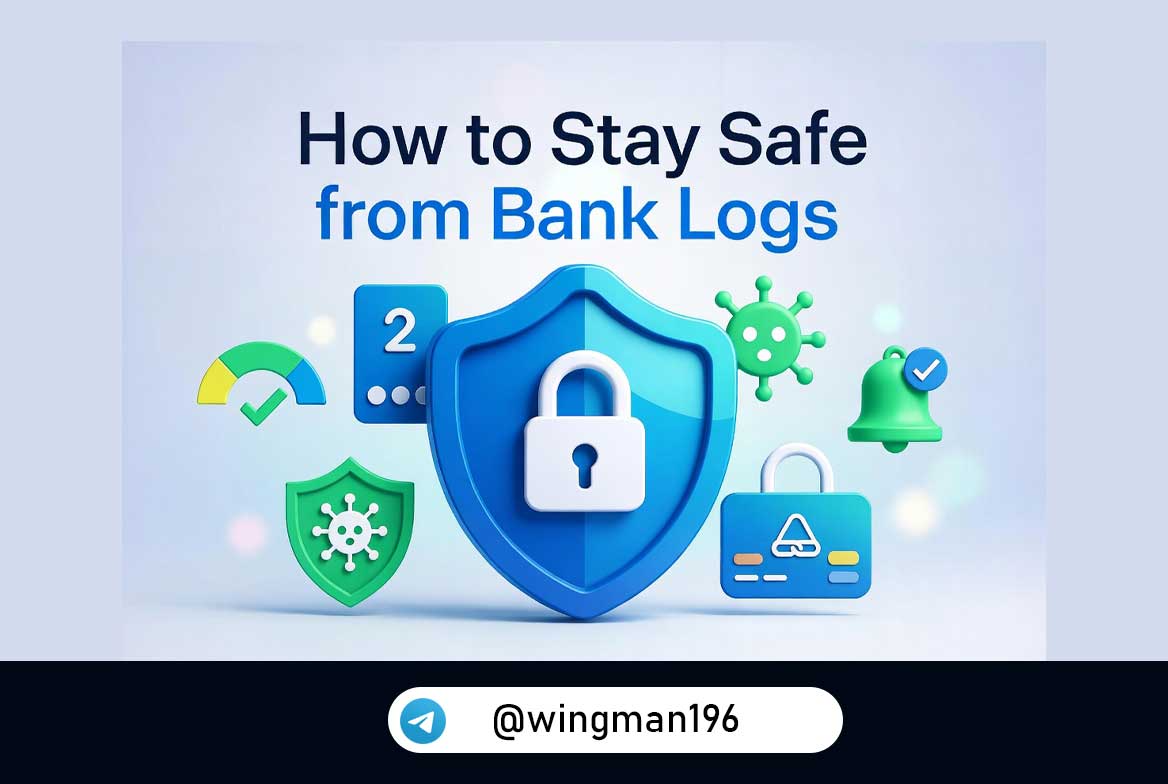
Protect yourself with:
- Unique passwords
- Multi-factor authentication
- Device updates
- Antivirus protection
Verify Websites Carefully
Scam websites often imitate legitimate platforms.
Always verify domains independently.
Be Skeptical of Online Financial Claims
If something sounds unbelievably profitable or easy, it usually is.
Protect Your Identity
Never upload personal documents to unverified platforms.
Why Curiosity Alone Can Still Be Dangerous
Many users justify visiting these sites “just to look.”
But even passive browsing carries risks.
Malicious websites may attempt:
- Browser exploits
- Tracking
- Malware downloads
- Phishing attacks
- Credential theft
Some scam operations specifically target curious visitors who underestimate the danger.
The Bigger Picture: Cybercrime Often Preys on Everyone Involved
One of the most overlooked realities is this:
In cybercrime ecosystems, almost everyone eventually becomes a victim.
Scammers scam buyers.
Malware operators infect users.
Fake vendors disappear with payments.
Personal data gets resold repeatedly.
There is very little trust in criminal marketplaces because there is no legal accountability.
That creates an environment built almost entirely on deception.
What Most People Get Wrong About Online Banking Fraud
Many people imagine online banking fraud as highly sophisticated Hollywood-style hacking.
In reality, most attacks succeed because of:
- Human error
- Weak passwords
- Social engineering
- Curiosity
- Greed
- Lack of awareness
That’s actually good news.
Because it means better awareness dramatically reduces risk.
FAQ: Buying Bank Logins Online and Scam Risks
What does “bank logs” mean?
The term usually refers to stolen online banking credentials and related account access information obtained illegally.
Are websites selling bank logins legitimate?
No legitimate business sells stolen banking credentials. Most such websites are scams, malware traps, or criminal operations.
Can visiting these sites infect my device?
Yes. Some sites distribute malware or attempt phishing attacks against visitors.
Are Telegram bank log groups real?
Many are fraudulent and designed to steal cryptocurrency payments or personal data.
Can malware steal my banking passwords?
Yes. Banking trojans, spyware, and keyloggers are specifically designed for this purpose.
Is buying stolen banking credentials illegal?
Yes. In most jurisdictions, possessing or using stolen financial credentials violates cybercrime and fraud laws.
Are cryptocurrency payments anonymous?
Not completely. Blockchain analysis tools can trace transactions, especially when linked to regulated exchanges.
Why do scammers target beginners?
Beginners are more likely to trust fake promises and ignore warning signs.
Can fake marketplaces steal my identity?
Absolutely. Some platforms collect personal documents and financial information for identity theft.
What should I do if I downloaded suspicious software?
Disconnect from the internet, run reputable anti-malware scans, change passwords from a clean device, and monitor financial accounts immediately.
Why do these scams keep growing?
Because financial desperation, curiosity, and social media hype create a constant stream of potential victims.
What’s the safest approach?
Avoid illegal marketplaces entirely and focus on legitimate cybersecurity education instead.
Conclusion
The internet is full of fake promises, but few are more dangerous than websites claiming to sell online banking access or “bank logs.”
Behind flashy screenshots and anonymous Telegram channels lies a world dominated by scams, malware, identity theft, financial fraud, and legal risk.
Most people who enter these spaces looking for opportunity end up losing:
- Money
- Personal data
- Device security
- Financial accounts
- Sometimes even their freedom
The smartest move is not learning how to participate in these schemes. It’s learning how to recognize and avoid them completely.
Online banking fraud ecosystems thrive on misinformation, desperation, and false confidence.
Awareness is your best protection.
The more informed you are, the harder you become to manipulate, scam, or exploit online.
