

NOTICE: All orders and payments must be made through our Our the Links in Contact page. Avoid paying to any third-party user claiming to us
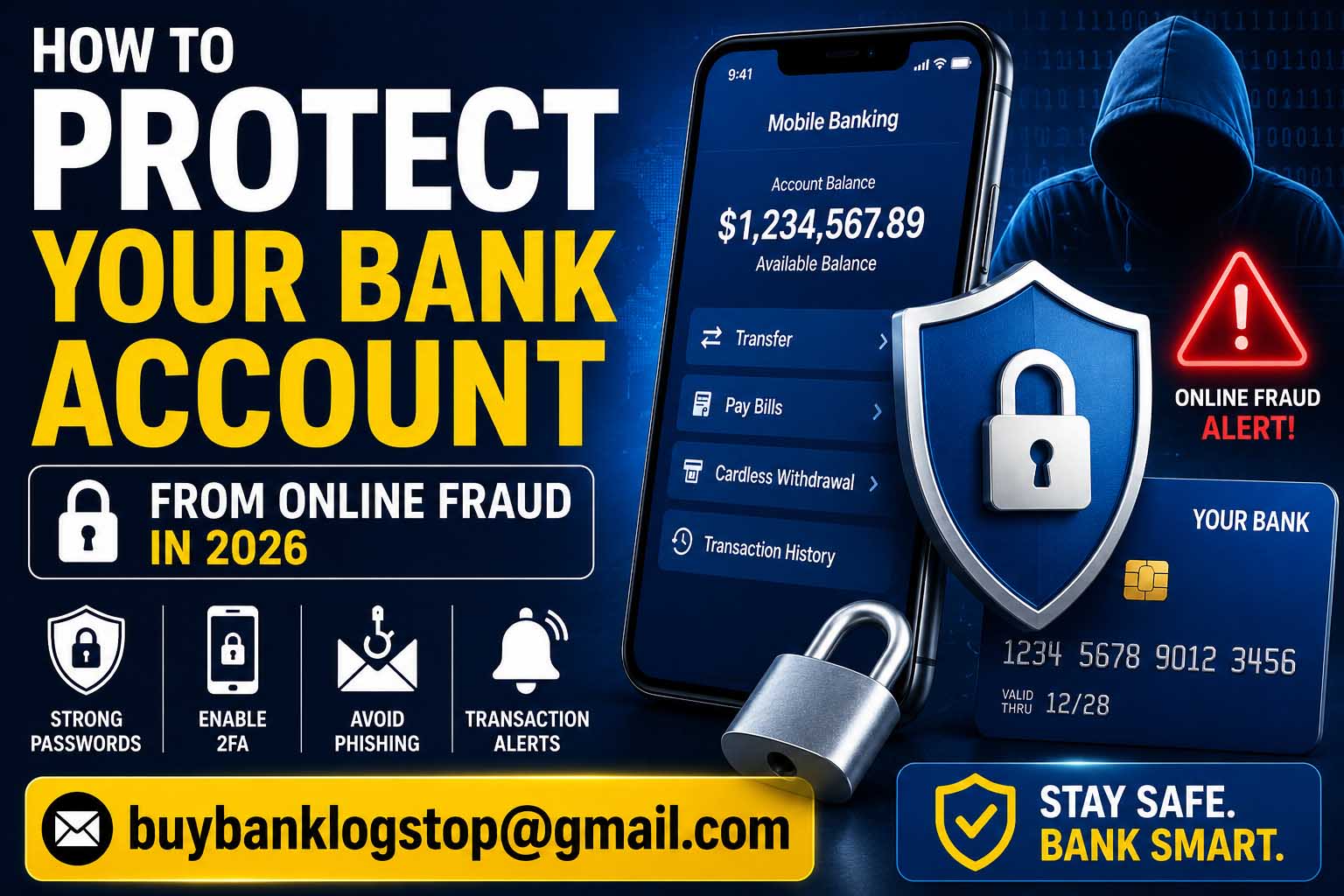
How to Protect Your Bank Account from Online Fraud in 2026 (Complete Guide)

How to Protect Your Bank Account from Online Fraud in 2026 (Complete Guide)
Introduction
Online banking has made managing money faster and more convenient—but it has also opened the door to increasingly sophisticated fraud. In 2026, cybercriminals are using smarter tactics like phishing, SIM swap attacks, and fake apps to target unsuspecting users.
Whether you use a traditional bank or a mobile fintech app, protecting your account is no longer optional. This guide breaks down exactly how online banking fraud works and, more importantly, how you can stay one step ahead.
What Is Online Banking Fraud?
Online banking fraud refers to unauthorized access to your financial accounts through digital means. Criminals use various techniques to steal login credentials, intercept transactions, or trick users into giving away sensitive information. How to Protect Your Bank Account .
Common Types of Online Fraud
- Phishing: Fake emails or messages designed to look like they’re from your bank
- SIM Swap Fraud: Hijacking your phone number to access your banking OTPs
- Malware Attacks: Malicious apps or software that steal your data
- Fake Banking Apps: Clone apps that mimic legitimate bank platforms
Why Online Banking Fraud Is Increasing in 2026
Several factors are driving the rise in fraud:
- More Digital Users: Millions of people now rely entirely on mobile banking
- Weak Security Habits: Reused passwords and lack of 2FA
- Advanced Social Engineering: Scammers are more convincing than ever
The bottom line: convenience has outpaced awareness for many users.
10 Proven Ways to Protect Your Bank Account
1. Use Strong, Unique Passwords
Avoid simple passwords like “123456” or your name. Use a mix of uppercase, lowercase, numbers, and symbols—and never reuse passwords across accounts.
2. Enable Two-Factor Authentication (2FA)
2FA adds an extra layer of security by requiring a second verification step, usually a code sent to your phone or generated by an app.
3. Avoid Public Wi-Fi for Banking
Public networks are easy targets for hackers. If you must use them, consider a trusted VPN.
4. Regularly Monitor Your Transactions
Check your bank statements frequently. Early detection can prevent bigger losses.
5. Use Official Banking Apps Only
Download apps only from verified sources like the Apple App Store or Google Play Store. Avoid third-party links.
6. Beware of Phishing Emails and SMS
Never click on suspicious links or share personal information via email or text. Your bank will never ask for sensitive details this way.
7. Secure Your Phone
Use a PIN, fingerprint, or facial recognition to lock your device. Your phone is the gateway to your bank account.
8. Update Apps and Devices Frequently
Software updates often include security patches that protect against new threats.
9. Never Share OTPs or PINs
One-Time Passwords (OTPs) are meant only for you. Sharing them—even with someone claiming to be from your bank—is a major risk.
10. Set Up Transaction Alerts
Enable SMS or email alerts for every transaction so you can spot suspicious activity instantly. How to Protect Your Bank Account .
Common Signs Your Bank Account Has Been Compromised
Watch out for these red flags:
- Transactions you don’t recognize
- OTP requests you didn’t initiate
- Alerts for logins from unknown devices or locations
If you notice any of these, act immediately.
What to Do If You’re a Victim of Fraud
Time is critical. Take these steps right away:
- Contact Your Bank Immediately
Use official customer care channels to report the issue - Freeze or Block Your Account
Prevent further unauthorized transactions - Change Your Passwords
Update all related accounts, especially email and banking apps - Report the Incident
In your country, you can report cybercrime to the appropriate authorities or your bank’s fraud desk
Best Tools and Apps to Stay Secure
- Password Managers: Help generate and store strong passwords
- Antivirus Software: Protects against malware and spyware
- Banking Alerts: Real-time notifications for account activity
Using the right tools significantly reduces your risk.
Frequently Asked Questions (FAQs)
Can someone hack my bank account with just my phone number?
Not directly—but with SIM swap fraud, attackers can gain control of your number and intercept OTPs.
Is mobile banking safe in your country?
Yes, as long as you follow security best practices like enabling 2FA and avoiding suspicious links.
What is the safest way to bank online?
Use secure networks, strong passwords, official apps, and enable all available security features. Best ways for How to Protect Your Bank Account.
Conclusion
Online banking fraud is evolving, but so are the tools and strategies to fight it. By adopting simple habits—like using strong passwords, enabling 2FA, and staying alert—you can significantly reduce your risk.
Don’t wait until something goes wrong. Start applying these tips today and take full control of your financial security.
