

NOTICE: All orders and payments must be made through our Our the Links in Contact page. Avoid paying to any third-party user claiming to us
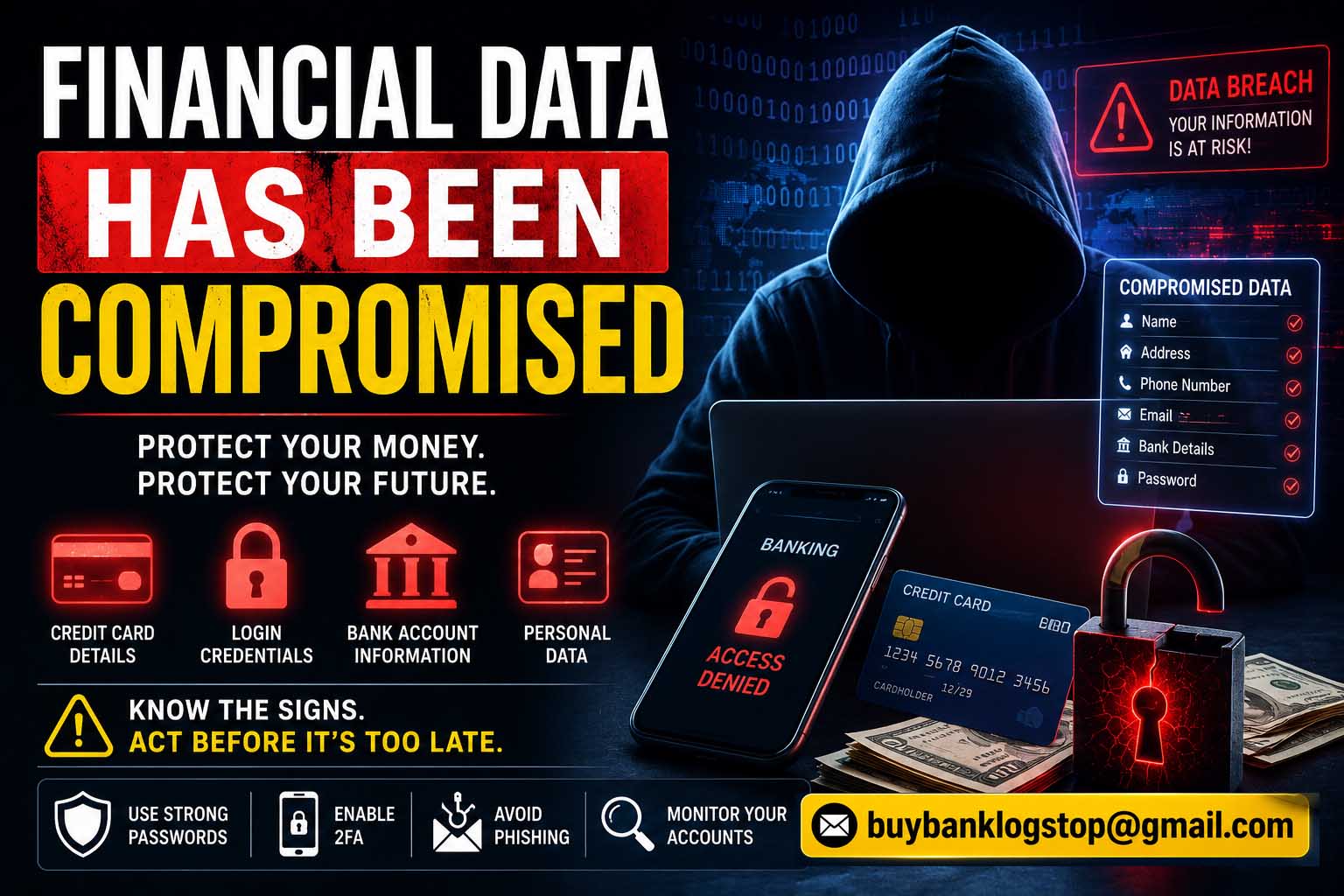
Top 10 Signs Your Financial Data Has Been Compromised

Top 10 Signs Your Financial Data Has Been Compromised
Introduction: Why You Should Be Concerned About Financial Data Being Compromised
In today’s digital age, your financial data is more vulnerable than ever. With cybercriminals lurking on the dark web and banklogs scams becoming increasingly common, the risk of having your financial data compromised is a pressing concern for individuals and businesses alike. From unauthorized transactions to identity theft, the consequences of a breach can be devastating. So, how do you know if your financial data has been compromised? This comprehensive guide outlines the top 10 signs to watch for, while shedding light on the dark side of the bank logs market and how scammers obtain bank logs. By understanding these red flags, you can take proactive steps to protect your finances.
Let’s dive into the warning signs that indicate your financial data may have been compromised and learn how to stay one step ahead of cybercriminals navigating the shadowy corners of the dark web and bank logs trade.
What Does It Mean When Your Financial Data Is Compromised?
Before we explore the signs, let’s define what it means when your financial data is compromised. Essentially, this occurs when unauthorized individuals gain access to sensitive information such as your bank account details, credit card numbers, or personal identification data. This information often ends up in the dark side of the bank logs market, where scammers buy and sell stolen credentials—commonly referred to as banklogs scams. These logs are detailed records of banking information, often obtained through phishing, malware, or data breaches. Understanding how scammers obtain bank logs is crucial to recognizing the risks and protecting yourself from becoming a victim.
Now, let’s uncover the top 10 signs that your financial data has been compromised and explore the sinister world of the dark web and bank logs.
Top 10 Signs Your Financial Data Has Been Compromised
-
Unexpected Transactions or Withdrawals
One of the most obvious signs that your financial data has been compromised is unauthorized activity in your bank or credit card accounts. If you notice transactions or withdrawals that you didn’t initiate, it’s a strong indicator that someone has accessed your information. This is often the result of a banklogs scam, where stolen credentials from the dark web and bank logs trade are used to siphon money from unsuspecting victims. -
Unfamiliar Accounts or Loans in Your Name
Another alarming sign of compromised financial data is discovering accounts or loans opened in your name that you didn’t authorize. Scammers who have infiltrated the dark side of the bank logs market often use stolen identities to apply for credit, leaving victims with debt and damaged credit scores. -
Notifications of Password or Account Changes
If you receive an email or text about a password change or login attempt that you didn’t request, your financial data may have been compromised. Cybercriminals often gain access through phishing attacks, a common method in how scammers obtain bank logs, before attempting to lock you out of your own accounts. -
Declined Transactions or Frozen Accounts
Have your transactions been declined unexpectedly, or has your bank frozen your account? This could mean that suspicious activity—potentially tied to a banklogs scam—has been detected. Banks often take these measures when they suspect your financial data has been compromised. -
Unusual Credit Report Activity
Regularly checking your credit report is essential. If you spot inquiries or accounts you don’t recognize, it’s a red flag that your financial data has been compromised. Such activity is often linked to data stolen from the dark web and bank logs sold to fraudsters. -
Receiving Bills for Unpurchased Items
If you start receiving bills or collection notices for products or services you never purchased, it’s a sign that your financial data has been compromised. Scammers exploiting the dark side of the bank logs market may use your details to make fraudulent purchases. -
Emails or Calls from Debt Collectors
Similarly, if debt collectors contact you about debts you don’t owe, it’s likely that your financial data has been compromised. This is a common outcome of banklogs scams, where stolen information is used to rack up debts in someone else’s name. -
Missing Bank Statements or Bills
If your bank statements or bills stop arriving, it could mean that a cybercriminal has changed your contact information after gaining access to your account. This tactic is often used by those who trade in the dark web and bank logs, ensuring victims remain unaware of fraudulent activity. -
Suspicious Emails or Texts Requesting Information
Phishing attempts are a primary way how scammers obtain bank logs. If you receive unsolicited messages asking for personal or financial details, it’s a sign that someone may be trying to compromise your data or has already done so. -
Slow or Unresponsive Devices
If your computer or phone suddenly becomes slow, crashes frequently, or shows signs of malware, it could indicate that your financial data has been compromised. Cybercriminals often install keyloggers or spyware to steal banking details, which are then sold in banklogs scams on the dark web.
The Dark Side of the Bank Logs Market: How Scammers Operate
Understanding the top signs that your financial data has been compromised is only half the battle. To truly protect yourself, you need to grasp the dark side of the bank logs market and how scammers operate. On the dark web, bank logs—detailed records of stolen banking information—are bought and sold for profit. These banklogs scams fuel a multi-billion-dollar underground economy, where your compromised financial data becomes a commodity.
So, how do scammers obtain bank logs? Common methods include phishing emails that trick users into revealing login credentials, malware that captures data directly from devices, and large-scale data breaches targeting financial institutions. Once obtained, this data is packaged into bank logs and sold on the dark web and bank logs marketplaces, often for as little as a few dollars per account. The buyers then exploit this information for unauthorized transactions, identity theft, or further scams.
Steps to Take If Your Financial Data Has Been Compromised
If you’ve identified any of the top 10 signs that your financial data has been compromised, act quickly to minimize damage. Here are actionable steps to follow, without moral judgment or warnings—just the facts:
- Contact your bank or credit card provider immediately to report suspicious activity and freeze your accounts.
- Change all passwords associated with your financial accounts, using strong, unique combinations.
- Monitor your credit reports for unusual activity and place a fraud alert if necessary.
- File a report with local authorities or cybercrime units to document the incident.
- Consider using identity theft protection services to track and safeguard your data.
Being proactive is key to mitigating the fallout from a banklogs scam or other attempts to exploit your compromised financial data.
How to Protect Yourself from Financial Data Breaches
Prevention is always better than reaction. To avoid falling victim to the dark side of the bank logs market, protect your financial data with these strategies:
- Use two-factor authentication (2FA) on all financial accounts to add an extra layer of security.
- Avoid clicking on suspicious links or downloading attachments from unknown sources, as phishing is a primary method in how scammers obtain bank logs.
- Regularly update your passwords and avoid reusing them across multiple platforms.
- Install reputable antivirus software to detect and prevent malware that could compromise your financial data.
- Monitor your accounts frequently for any signs of unauthorized access or activity tied to banklogs scams.
By staying vigilant, you can reduce the risk of your financial data being compromised and ending up on the dark web and bank logs forums.
Conclusion: Stay Ahead of Cybercriminals
The threat of having your financial data compromised is real, especially with the rise of banklogs scams and the shadowy dealings of the dark side of the bank logs market. By recognizing the top 10 signs—such as unauthorized transactions, unfamiliar accounts, or suspicious communications—you can act swiftly to protect yourself. Understanding how scammers obtain bank logs through phishing, malware, and data breaches, and how they trade this information on the dark web and bank logs platforms, empowers you to take preventive measures.
Don’t let cybercriminals exploit your financial data. Stay informed, monitor your accounts, and secure your digital life to avoid becoming another victim of a banklogs scam. If you suspect your financial data has been compromised, take immediate action using the steps outlined above. Your vigilance is your strongest defense against the ever-evolving threats in today’s digital landscape.
