

NOTICE: All orders and payments must be made through our Our the Links in Contact page. Avoid paying to any third-party user claiming to us
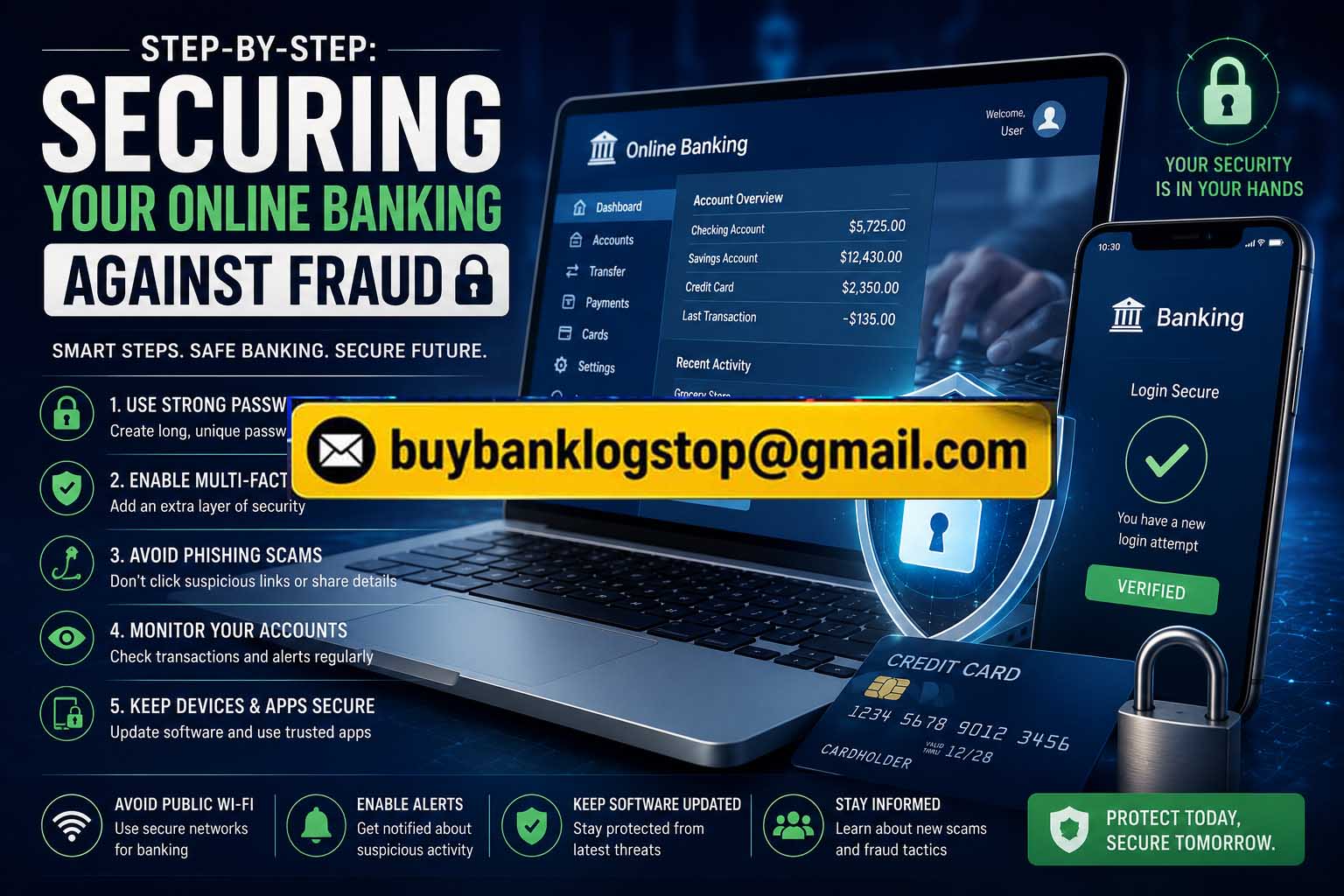
Step-by-Step: Securing Your Online Banking Against Fraud

Step-by-Step: Securing Your Online Banking Against Fraud
Online banking has made managing money easier than ever, but it has also created new opportunities for cybercriminals. From phishing scams and fake banking apps to credential theft and malware attacks, financial fraud continues to evolve rapidly.
That is why Securing Your Online Banking Against Fraud has become one of the most important cybersecurity priorities for individuals and businesses in 2026.
This comprehensive guide explains practical steps for Securing Your Online Banking Against Fraud while helping you reduce the risk of unauthorized transactions, identity theft, and account compromise.
Why Securing Your Online Banking Against Fraud Matters
Cybercriminals constantly target online banking users because financial accounts contain sensitive personal and financial information.
Modern banking fraud may involve:
- Phishing emails
- Fake banking websites
- SMS scams
- Malware infections
- SIM swap attacks
- Credential stuffing
- Data breaches
- Fake customer support calls
Understanding the importance of Securing Your Online Banking Against Fraud can help users stay ahead of these growing cyber threats.
New Trends: Emerging Trends in Cybercrime: What to Expect in 2026
Step 1: Use Strong and Unique Passwords
One of the most critical steps in Securing Your Online Banking Against Fraud is creating strong passwords.
Avoid:
- Simple passwords
- Reused passwords
- Personal information
- Common phrases
A strong banking password should include:
- Uppercase letters
- Lowercase letters
- Numbers
- Special characters
- At least 12–16 characters
Example:
- Weak Password: bank123
- Strong Password: T9#rV4!mL2@qX8
Using unique passwords is essential for Securing Your Online Banking Against Fraud because hackers often use leaked credentials from other websites to access banking accounts.
Step 2: Enable Multi-Factor Authentication (MFA)
Multi-factor authentication adds an extra security layer beyond your password.
For better Securing Your Online Banking Against Fraud, enable:
- Authenticator apps
- SMS verification
- Biometric login
- Security keys
MFA helps protect accounts even if attackers steal your password.
Banks increasingly encourage MFA because it significantly reduces unauthorized access risks.
Step 3: Avoid Public Wi-Fi for Banking
Public Wi-Fi networks can expose users to:
- Man-in-the-middle attacks
- Session hijacking
- Traffic interception
- Fake hotspot scams
A major part of Securing Your Online Banking Against Fraud involves avoiding online banking on:
- Airport Wi-Fi
- Hotel Wi-Fi
- Coffee shop networks
- Public hotspots
If necessary, use:
- A trusted VPN
- Mobile data connections
- Encrypted networks
Step 4: Watch Out for Phishing Scams
Phishing remains one of the biggest threats to online banking security.
Cybercriminals may send:
- Fake login pages
- Fraudulent emails
- Urgent SMS alerts
- Fake security warnings
To improve Securing Your Online Banking Against Fraud:
- Never click suspicious links
- Verify website URLs carefully
- Avoid downloading unknown attachments
- Contact your bank directly if unsure
Always type your bank’s website manually instead of clicking links from messages.
Step 5: Keep Devices Updated
Outdated software may contain vulnerabilities that hackers exploit.
For stronger Securing Your Online Banking Against Fraud, regularly update:
- Operating systems
- Browsers
- Banking apps
- Antivirus software
- Security patches
Software updates often fix critical security flaws that cybercriminals actively target.
Step 6: Install Reliable Security Software
Modern cybersecurity tools can help detect:
- Malware
- Keyloggers
- Banking trojans
- Spyware
- Fake websites
Reliable antivirus and endpoint protection software are important for Securing Your Online Banking Against Fraud.
Security software should include:
- Real-time protection
- Anti-phishing features
- Firewall protection
- Web filtering
Step 7: Monitor Your Bank Statements Regularly
Frequent account monitoring helps identify suspicious activity early.
When Securing Your Online Banking Against Fraud, review:
- Transaction history
- Account balances
- Transfer notifications
- Debit card activity
Immediately report:
- Unknown purchases
- Unauthorized transfers
- Suspicious login attempts
Early detection can reduce financial losses significantly.
Step 8: Enable Banking Alerts and Notifications
Most banks allow users to activate:
- Login alerts
- Transfer notifications
- Large transaction warnings
- Failed login alerts
These features improve Securing Your Online Banking Against Fraud by notifying users instantly about suspicious account activity.
Real-time alerts can help stop fraud before major damage occurs.
Step 9: Use Official Banking Apps Only
Fake banking applications are becoming increasingly common.
To improve Securing Your Online Banking Against Fraud:
- Download apps only from official app stores
- Verify the developer name
- Read user reviews
- Avoid unofficial APK downloads
Cybercriminals often create fake apps designed to steal login credentials.
Step 10: Protect Your Email Account
Your email account is often linked directly to your online banking profile.
If attackers compromise your email, they may:
- Reset banking passwords
- Intercept verification codes
- Access sensitive financial information
A critical part of Securing Your Online Banking Against Fraud involves protecting your email with:
- Strong passwords
- MFA
- Security alerts
- Recovery protection
Step 11: Beware of Social Engineering Attacks
Fraudsters often manipulate victims psychologically.
Common tactics include:
- Pretending to be bank staff
- Creating fake emergencies
- Requesting verification codes
- Asking for confidential details
Banks usually never ask for:
- Full passwords
- PIN numbers
- OTP codes
- Security answers via phone or email
Understanding social engineering is vital for Securing Your Online Banking Against Fraud.
Step 12: Secure Your Mobile Device
Mobile banking continues to grow rapidly, making smartphones major targets for attackers.
For safer mobile banking:
- Use screen locks
- Enable biometric authentication
- Avoid rooted devices
- Install updates regularly
- Use app permissions carefully
Mobile device protection is essential for Securing Your Online Banking Against Fraud in today’s digital banking environment.
New Reads: Comparison: Free vs. Paid Cybercrime Tools and Resources
Common Online Banking Fraud Techniques in 2026
Cybercriminals continue developing advanced attack methods.
Emerging threats include:
- AI-generated phishing scams
- Deepfake customer support fraud
- SIM swap attacks
- Credential stuffing
- Banking trojans
- QR code scams
- Fake investment platforms
Staying informed about these threats improves your chances of Securing Your Online Banking Against Fraud effectively.
Signs Your Banking Account May Be Compromised
Watch for warning signs such as:
- Unrecognized transactions
- Failed login notifications
- Password reset emails
- Missing account funds
- Device login alerts
- Locked banking accounts
If you notice suspicious activity:
- Contact your bank immediately
- Change passwords
- Enable MFA
- Scan devices for malware
- Freeze affected cards if necessary
Fast action is critical for Securing Your Online Banking Against Fraud after a potential breach.
Best Practices for Long-Term Banking Security
For continuous Securing Your Online Banking Against Fraud, follow these habits:
- Update passwords regularly
- Avoid sharing sensitive information
- Review account activity weekly
- Secure home Wi-Fi networks
- Learn about new fraud tactics
- Use password managers
- Limit device access
Cybersecurity awareness remains one of the strongest defenses against financial fraud.
Final Thoughts
As cyber threats continue evolving, Securing Your Online Banking Against Fraud is no longer optional. Cybercriminals are using increasingly advanced techniques to target banking users, making digital financial security more important than ever.
By following the strategies outlined in this guide, individuals can significantly reduce the risk of phishing attacks, identity theft, account compromise, and unauthorized transactions.
The future of banking is digital, and successful Securing Your Online Banking Against Fraud depends on staying informed, proactive, and security-conscious at all times.
