

NOTICE: All orders and payments must be made through our Our the Links in Contact page. Avoid paying to any third-party user claiming to us
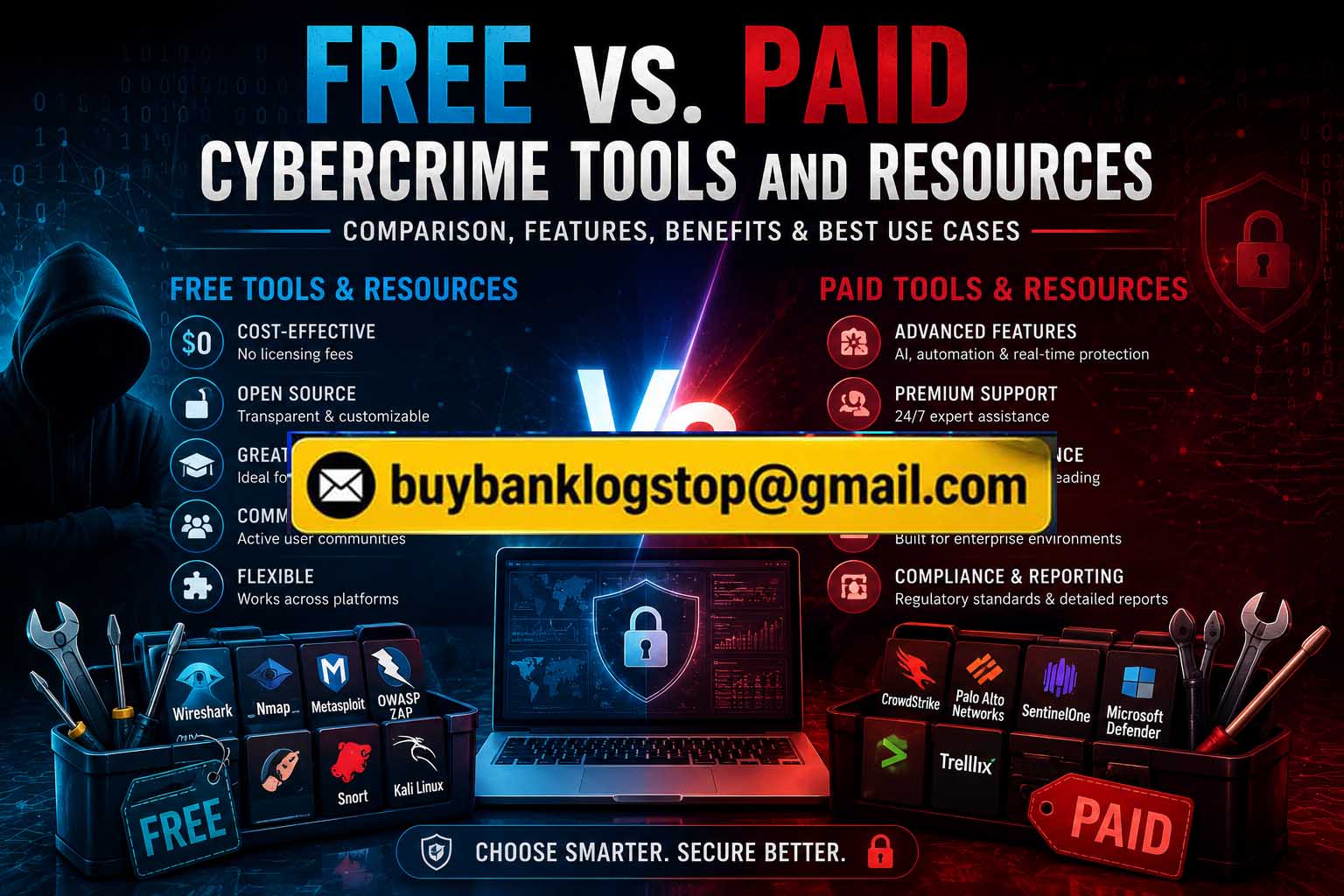

Table of Contents
ToggleComparison: Free vs. Paid Cybercrime Tools and Resources
The cybersecurity industry has grown rapidly over the last decade, leading to the rise of countless security tools and digital defense platforms. One of the biggest discussions in the cybersecurity world today is the comparison between Free vs. Paid Cybercrime Tools and Resources.
Businesses, ethical hackers, students, and IT professionals often struggle to decide whether free security tools are enough or if premium cybersecurity solutions are worth the investment. Understanding the strengths and weaknesses of Free vs. Paid Cybercrime Tools and Resources is essential for making smart security decisions in 2026.
This guide explores the key differences, advantages, limitations, and real-world use cases of Free vs. Paid Cybercrime Tools and Resources while helping users understand which option best fits their cybersecurity needs.
A Deep dive to Free cybercrime tools Online
Understanding Free vs. Paid Cybercrime Tools and Resources
The phrase Free vs. Paid Cybercrime Tools and Resources refers to the comparison between no-cost cybersecurity platforms and commercial-grade security products designed for protection, monitoring, analysis, and cyber defense.
Free tools are usually open-source or community-driven, while paid tools often provide enterprise-grade features, automation, support, and advanced threat intelligence.
When analyzing Free vs. Paid Cybercrime Tools and Resources, several factors matter:
- Security capabilities
- Real-time protection
- Threat intelligence quality
- Ease of use
- Automation features
- Technical support
- Scalability
- Compliance features
The growing sophistication of cyber threats makes the debate around Free vs. Paid Cybercrime Tools and Resources more relevant than ever.
Advantages of Free Cybercrime Tools and Resources
Many cybersecurity professionals begin with free tools because they are accessible and widely available.
1. Cost-Effective Security
One of the biggest advantages of free cybersecurity resources is affordability. Small businesses, students, and startups often rely on free platforms to improve their digital security without major financial investment.
Examples include:
- Wireshark
- Nmap
- OpenVAS
- Snort
- OWASP ZAP
These tools remain popular in discussions around Free vs. Paid Cybercrime Tools and Resources because they offer powerful functionality at zero cost.
2. Open-Source Transparency
Many free security tools are open-source, meaning developers can inspect the source code for vulnerabilities or customization.
Open-source platforms encourage:
- Community collaboration
- Faster innovation
- Security transparency
- Plugin development
- Custom integrations
In the world of Free vs. Paid Cybercrime Tools and Resources, open-source transparency is considered a major advantage.
3. Educational Value
Free cybersecurity tools are heavily used for:
- Ethical hacking practice
- Security research
- Penetration testing labs
- Cybersecurity education
Students learning about Free vs. Paid Cybercrime Tools and Resources often start with free tools before moving into enterprise environments.
Platforms like:
- Kali Linux
- Metasploit Framework
- Burp Suite Community Edition
are widely used for cybersecurity training.
Deep Dive into Paid Cybercrime tools used by hackers
Limitations of Free Cybercrime Tools and Resources
While free tools are valuable, they also have important limitations.
1. Limited Advanced Features
One major challenge in Free vs. Paid Cybercrime Tools and Resources is feature availability.
Free tools may lack:
- AI-powered detection
- Real-time analytics
- Cloud integrations
- Advanced automation
- Enterprise reporting
Organizations dealing with sophisticated cyber threats often require capabilities beyond what free software provides.
2. Minimal Technical Support
Free tools typically rely on community forums instead of dedicated customer support.
This becomes problematic during:
- Security incidents
- System failures
- Critical downtime
- Large-scale deployments
The support gap is one of the biggest differences in Free vs. Paid Cybercrime Tools and Resources.
3. Scalability Challenges
Some free tools perform well in small environments but struggle at enterprise scale.
Large businesses may need:
- Centralized dashboards
- SIEM integration
- Automated compliance reports
- Multi-user management
This is where paid cybersecurity platforms often outperform free alternatives in the Free vs. Paid Cybercrime Tools and Resources debate.
Advantages of Paid Cybercrime Tools and Resources
Commercial cybersecurity products dominate enterprise security environments for several reasons.
1. Advanced Threat Detection
Paid cybersecurity platforms often include:
- AI-driven analytics
- Behavioral monitoring
- Machine learning detection
- Zero-day threat intelligence
- Automated incident response
These capabilities give paid solutions an edge in Free vs. Paid Cybercrime Tools and Resources comparisons.
Examples include:
- CrowdStrike
- Palo Alto Networks
- SentinelOne
- Microsoft Defender for Endpoint
- Splunk
2. Professional Technical Support
Businesses investing in paid security platforms usually receive:
- 24/7 support
- Dedicated account managers
- Emergency response services
- Security consultation
Reliable support is a major selling point in discussions about Free vs. Paid Cybercrime Tools and Resources.
3. Compliance and Reporting Features
Modern businesses must comply with:
- GDPR
- HIPAA
- PCI DSS
- ISO 27001
- SOC 2
Paid cybersecurity platforms often include automated compliance tools and reporting systems.
This is a critical factor in enterprise-level evaluations of Free vs. Paid Cybercrime Tools and Resources.
Limitations of Paid Cybercrime Tools and Resources
Despite their advantages, paid solutions are not perfect.
1. High Cost
Enterprise cybersecurity platforms can be expensive.
Costs may include:
- Monthly subscriptions
- Licensing fees
- User-based pricing
- Cloud storage charges
- Premium support fees
For smaller organizations, the financial burden can make Free vs. Paid Cybercrime Tools and Resources a difficult decision.
2. Vendor Lock-In
Some paid platforms create dependency on a single vendor ecosystem.
This may limit:
- Flexibility
- Customization
- Integration freedom
- Migration options
Vendor lock-in is an important concern when comparing Free vs. Paid Cybercrime Tools and Resources.
3. Complexity
Enterprise security tools can require:
- Dedicated security teams
- Advanced configuration
- Continuous maintenance
- Specialized training
Without skilled professionals, organizations may struggle to maximize the benefits of paid security platforms.
Trending: Emerging Trends in Cybercrime: What to Expect in 2026
Free vs. Paid Cybercrime Tools and Resources: Which Is Better?
The answer depends on the user’s needs.
Free Tools Are Best For:
- Students
- Cybersecurity beginners
- Small businesses
- Security researchers
- Learning environments
- Basic vulnerability scanning
Paid Tools Are Best For:
- Enterprises
- Large organizations
- Critical infrastructure
- Compliance-heavy industries
- Advanced threat detection
- Real-time incident response
The discussion around Free vs. Paid Cybercrime Tools and Resources is not about choosing one over the other. Many organizations combine both approaches for layered security.
Hybrid Security Approaches Are Becoming Popular
In 2026, many organizations use hybrid cybersecurity strategies that combine free and paid solutions.
Examples include:
- Open-source monitoring tools with paid threat intelligence
- Free vulnerability scanners alongside enterprise SIEM systems
- Community-driven detection tools integrated with premium security platforms
This blended model helps organizations balance cost and security effectiveness in the evolving landscape of Free vs. Paid Cybercrime Tools and Resources.
Emerging Trends in Cybersecurity Resources
The future of Free vs. Paid Cybercrime Tools and Resources will likely include:
- AI-assisted cybersecurity
- Cloud-native security tools
- Automated incident response
- Subscription-based security services
- Decentralized threat intelligence sharing
- Open-source AI security platforms
As cyber threats become more sophisticated, both free and paid cybersecurity ecosystems will continue evolving rapidly.
Best Practices for Choosing Cybersecurity Tools
When evaluating Free vs. Paid Cybercrime Tools and Resources, consider:
Security Needs
Identify whether you need:
- Basic monitoring
- Enterprise defense
- Threat hunting
- Compliance management
Budget
Balance affordability with security effectiveness.
Scalability
Choose tools that can grow with your organization.
Support Requirements
Consider whether you need professional assistance during incidents.
Integration Compatibility
Ensure tools work with your existing infrastructure.
Making money is an art of been intentional not a guess work
Final Thoughts
The debate surrounding Free vs. Paid Cybercrime Tools and Resources continues to shape the cybersecurity industry in 2026. Free tools provide accessibility, flexibility, and strong educational value, while paid platforms deliver enterprise-grade protection, automation, and professional support.
For many organizations, the smartest strategy is not choosing one side exclusively but combining the strengths of both. As cyber threats continue evolving, selecting the right mix of cybersecurity tools and resources will become increasingly important for protecting sensitive data, systems, and digital infrastructure.
Understanding the true differences between Free vs. Paid Cybercrime Tools and Resources can help individuals and businesses build stronger, smarter, and more resilient cybersecurity defenses in the years ahead.

Sora
Sora is a cybersecurity researcher and fraud prevention advocate specializing in bank logs, carding techniques, and underground cybercrime operations. Passionate about demystifying how scammers work, she delivers clear, practical safety tips to help individuals protect their finances and stay secure online.
Newsletter Updates
Enter your email address below and subscribe to our newsletter