

NOTICE: All orders and payments must be made through our Our the Links in Contact page. Avoid paying to any third-party user claiming to us
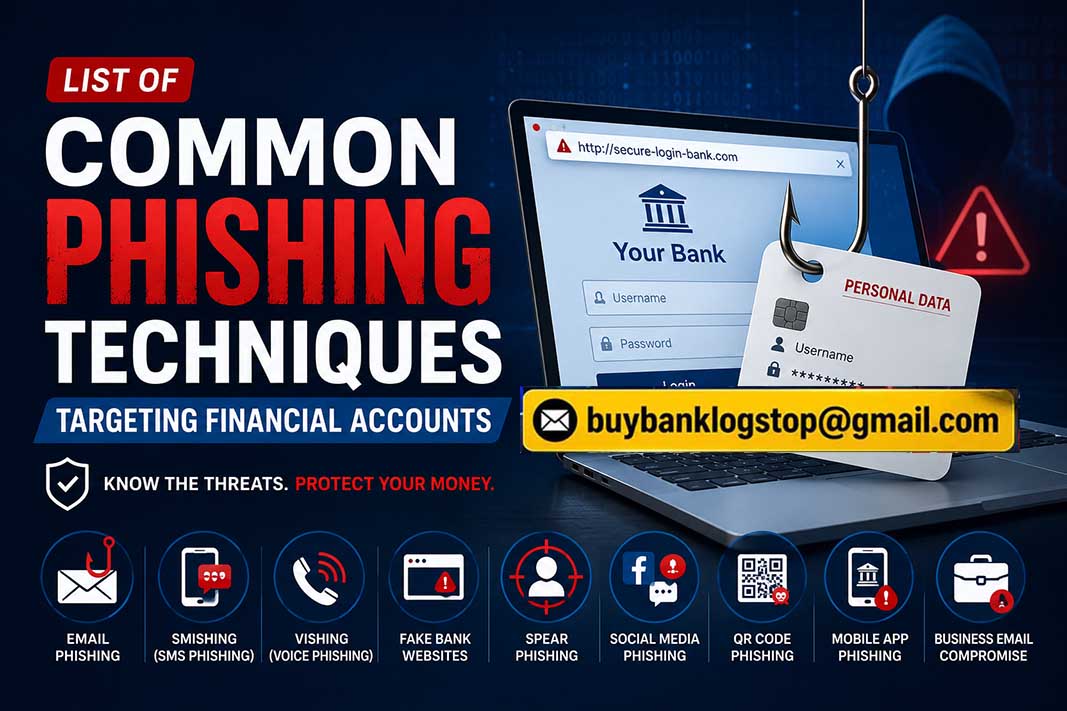
List of Common Phishing Techniques Targeting Financial Accounts

Exposed Daily Phishing Techniques Targeting Financial Accounts by Hackers
Cybercriminals are constantly developing new ways to steal sensitive banking information from unsuspecting users. One of the most dangerous threats today involves phishing techniques targeting financial accounts. These scams are designed to trick people into revealing login credentials, credit card details, OTP codes, and other confidential financial information.
Understanding how these attacks work is the first step toward protecting yourself. In this guide, we’ll explore the most common phishing techniques targeting financial accounts, how they operate, warning signs to watch for, and practical ways to stay secure online.
Must Read: How to Identify Fake Banking Websites and Protect Your Data
What Are Phishing Attacks?
Phishing attacks are fraudulent attempts to obtain sensitive information by pretending to be a trusted institution. Attackers often impersonate banks, payment providers, investment platforms, or government agencies.
These scams usually arrive through:
- Emails
- SMS messages
- Fake websites
- Phone calls
- Social media messages
- Mobile apps
The primary goal of phishing techniques targeting financial accounts is to gain unauthorized access to your money or personal data.
Common Phishing Techniques Targeting Financial Accounts
1. Email Phishing
Email phishing is the most widespread form of cyber fraud. Attackers send fake emails that appear to come from legitimate financial institutions.
Typical messages include:
- “Your account has been suspended.”
- “Unusual login detected.”
- “Verify your banking information immediately.”
These emails often contain malicious links leading to fake banking websites designed to steal credentials.
Warning Signs
- Poor grammar or spelling
- Suspicious sender addresses
- Urgent or threatening language
- Fake login pages
- Unexpected attachments
Protection Tips
- Never click suspicious links
- Verify the sender’s email address
- Visit bank websites directly instead of using email links
- Enable two-factor authentication (2FA)
Also Reads: How Social Engineering Manipulates Victims into Sharing Bank Details
2. Smishing (SMS Phishing)
Smishing involves fraudulent text messages designed to trick users into clicking malicious links or sharing financial details.
Examples include:
- Fake bank fraud alerts
- Delivery notifications
- Tax refund messages
- Payment verification requests
Because mobile users often trust text messages more than emails, smishing has become one of the fastest-growing phishing techniques targeting financial accounts.
Protection Tips
- Avoid clicking links from unknown numbers
- Never share OTPs through SMS
- Confirm suspicious alerts directly with your bank
3. Vishing (Voice Phishing)
Vishing uses phone calls to deceive victims into revealing sensitive information.
Scammers may impersonate:
- Bank representatives
- Government officials
- Credit card security teams
- Tech support agents
Attackers often use fear tactics, claiming unauthorized transactions have occurred.
At Buybanklogs.top we bring you safety insights and how to protect your Bank logs from scammers
Common Vishing Tricks
- Asking for card verification codes
- Requesting online banking passwords
- Demanding immediate action to “secure” accounts
Protection Tips
- Hang up and call your bank directly
- Never share passwords or PINs over the phone
- Be cautious of caller ID spoofing
4. Fake Banking Websites
Cybercriminals create cloned banking websites that look nearly identical to legitimate ones.
Victims usually land on these websites through phishing emails, SMS links, or fake advertisements.
Once login details are entered, attackers steal the information instantly.
How to Spot Fake Websites
- Misspelled domain names
- Missing HTTPS encryption
- Poor website design
- Suspicious redirects
- Fake security badges
Protection Tips
- Always check website URLs carefully
- Bookmark official banking websites
- Look for HTTPS and padlock icons
Also Read: Underground Market for Stolen Bank Logins: Risks, Tactics, and Prevention
5. Spear Phishing
Spear phishing is a highly targeted phishing attack aimed at specific individuals or organizations.
Unlike generic scams, attackers gather personal information about victims before launching attacks.
Examples include:
- Personalized banking emails
- Messages mentioning recent transactions
- Fake corporate finance requests
Because these scams appear more convincing, spear phishing is among the most dangerous phishing techniques targeting financial accounts.
Protection Tips
- Verify requests independently
- Limit personal information shared online
- Use strong email security filters
6. Social Media Phishing
Scammers use fake social media profiles and advertisements to impersonate banks and financial brands.
Victims may receive:
- Direct messages about account issues
- Fake investment opportunities
- Fraudulent giveaway promotions
Protection Tips
- Only interact with verified accounts
- Avoid clicking financial links shared through social media
- Report suspicious profiles immediately
7. Clone Phishing
In clone phishing, attackers duplicate legitimate emails previously received by victims.
The copied email may contain:
- A malicious attachment
- A fake payment link
- Fraudulent login pages
Since the message appears familiar, users are more likely to trust it.
Protection Tips
- Re-check links before clicking
- Contact the sender if unsure
- Scan attachments for malware
8. Business Email Compromise (BEC)
BEC attacks target businesses and employees handling financial transactions.
Attackers impersonate executives, vendors, or finance departments to trick employees into transferring money.
Common Examples
- Fake invoice requests
- Payroll account changes
- Wire transfer instructions
BEC scams have caused billions in financial losses worldwide.
Protection Tips
- Verify payment requests verbally
- Use multi-step approval systems
- Train employees on phishing awareness’
Trends: Emerging Trends in Cybercrime: What to Expect in 2026
9. QR Code Phishing (Quishing)
Cybercriminals now use malicious QR codes to redirect users to fake financial websites.
These QR codes may appear in:
- Emails
- Posters
- Restaurant menus
- Payment requests
Protection Tips
- Preview URLs before opening
- Avoid scanning random QR codes
- Use mobile security software
10. Mobile App Phishing
Fraudsters develop fake banking or payment apps that mimic legitimate applications.
These apps may steal:
- Banking credentials
- Credit card data
- OTP verification codes
Protection Tips
- Download apps only from official stores
- Check app reviews carefully
- Verify the developer’s identity
Why Financial Accounts Are Prime Targets
Financial accounts contain highly valuable information including:
- Bank login credentials
- Credit card details
- Personal identification data
- Investment account access
- Mobile banking authentication codes
This makes phishing techniques targeting financial accounts extremely profitable for cybercriminals.
How to Protect Your Financial Accounts from Phishing
Use Strong Passwords
Create unique passwords for each financial account and avoid reusing credentials.
Enable Multi-Factor Authentication (MFA)
MFA adds an extra security layer, making it harder for attackers to gain access.
Keep Software Updated
Install updates for:
- Browsers
- Banking apps
- Antivirus software
- Operating systems
Security patches help protect against vulnerabilities.
Monitor Financial Statements
Regularly review your:
- Bank statements
- Credit card transactions
- Mobile payment history
Report suspicious activity immediately.
Educate Yourself and Your Family
Awareness is one of the strongest defenses against phishing techniques targeting financial accounts.
Teach family members how to recognize scams and suspicious communications.
Daily Insights: Step-by-Step: Securing Your Online Banking Against Fraud
Final Thoughts
Phishing attacks continue to evolve, becoming more sophisticated and harder to detect. Understanding the most common phishing techniques targeting financial accounts can help you recognize threats before they cause financial harm.
Whether it’s fake banking websites, phishing emails, smishing texts, or fraudulent phone calls, staying alert is essential. By following cybersecurity best practices and verifying suspicious requests carefully, you can significantly reduce your risk of becoming a victim.
Protecting your financial information starts with awareness, caution, and proactive online security habits.
