

NOTICE: All orders and payments must be made through our Our the Links in Contact page. Avoid paying to any third-party user claiming to us
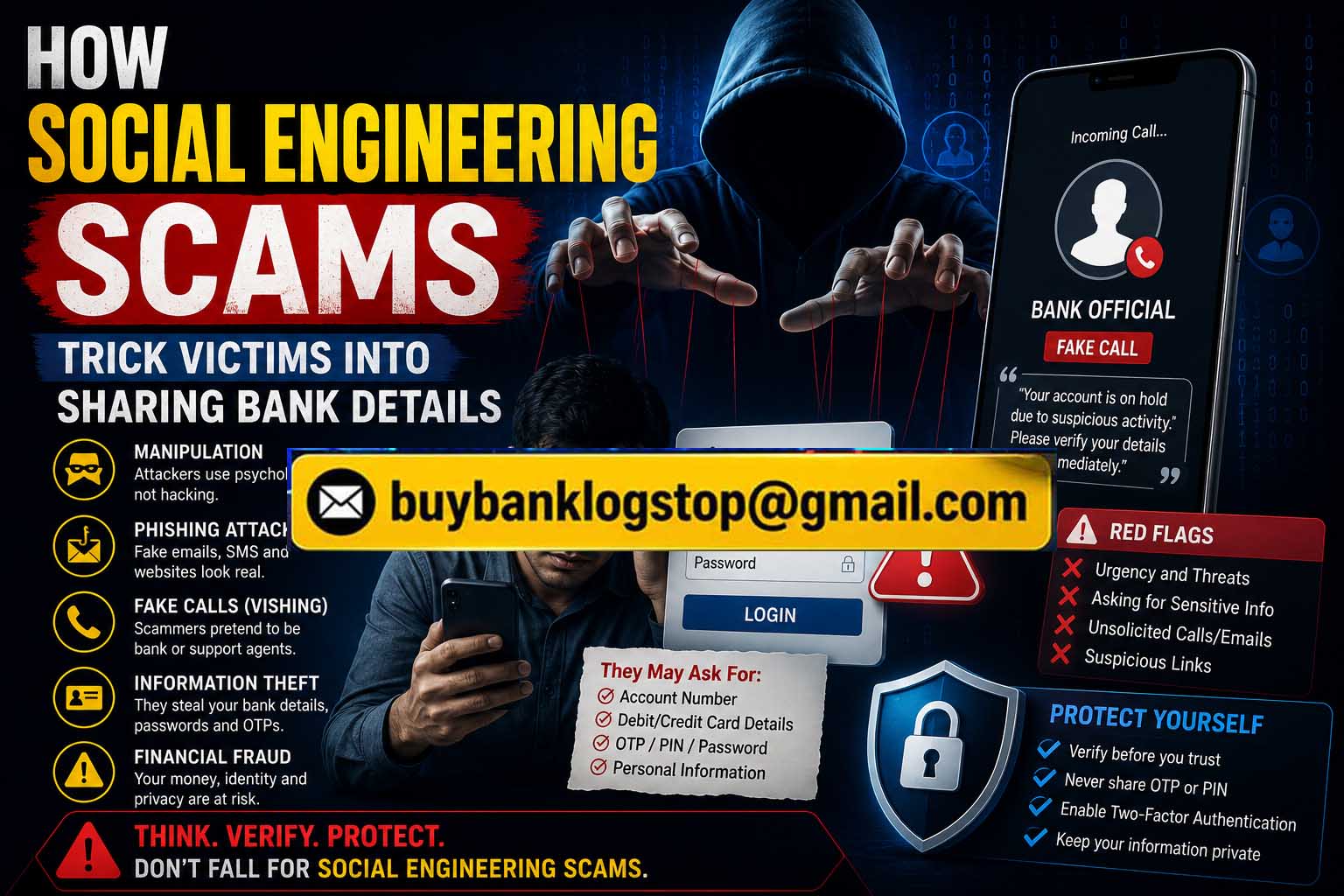
How Social Engineering Manipulates Victims into Sharing Bank Details

How Social Engineering Manipulates Victims into Sharing Bank Details
Cybercriminals no longer rely only on advanced malware and hacking tools to steal financial information. In many cases, the most effective weapon is psychological manipulation. Modern attackers use deception, fear, urgency, and trust to trick people into revealing sensitive information.
This is exactly how Social Engineering Manipulates Victims into Sharing Bank Details in today’s digital world.
Social engineering attacks are responsible for billions of dollars in financial fraud every year. Instead of attacking computer systems directly, cybercriminals target human behavior, making individuals the weakest link in cybersecurity.
Understanding how Social Engineering Manipulates Victims into Sharing Bank Details is essential for protecting yourself against phishing scams, identity theft, online banking fraud, and financial cybercrime.
Also Read: Underground Market for Stolen Bank Logins: Risks, Tactics, and Prevention
What Is Social Engineering?
Social engineering is a cybercrime tactic where attackers manipulate people into revealing confidential information or performing actions that compromise security.
Rather than breaking through firewalls or encryption, criminals exploit:
- Human emotions
- Trust
- Fear
- Curiosity
- Panic
- Greed
The reason Social Engineering Manipulates Victims into Sharing Bank Details so effectively is because attackers understand human psychology better than many people realize.
Why Social Engineering Works So Well
One major reason Social Engineering Manipulates Victims into Sharing Bank Details successfully is emotional pressure.
Attackers create situations that force victims to react quickly without thinking carefully.
Common emotional triggers include:
- Fear of account suspension
- Urgent security warnings
- Fake fraud alerts
- Exciting prize offers
- Emotional emergencies
- Authority impersonation
Cybercriminals carefully design scams to bypass logical thinking and create emotional responses.
Trends: Emerging Trends in Cybercrime: What to Expect in 2026
Common Social Engineering Techniques Used to Steal Bank Details
1. Phishing Emails
Phishing remains one of the most common ways Social Engineering Manipulates Victims into Sharing Bank Details.
Attackers send fake emails pretending to be:
- Banks
- Payment providers
- Government agencies
- Online shopping platforms
These emails often contain:
- Fake login pages
- Security alerts
- Account verification requests
- Fraud warnings
Victims unknowingly enter their credentials into fake websites controlled by criminals.
2. Smishing (SMS Phishing)
Smishing uses text messages instead of emails.
Cybercriminals may send messages like:
- “Your bank account has been locked”
- “Suspicious transaction detected”
- “Verify your account immediately”
This tactic is highly effective because mobile users often trust text messages more than emails.
Smishing is another powerful example of how Social Engineering Manipulates Victims into Sharing Bank Details through urgency and fear.
3. Vishing (Voice Phishing)
Vishing involves phone calls from scammers pretending to be:
- Bank representatives
- Fraud investigators
- Technical support agents
Attackers may use:
- Caller ID spoofing
- AI-generated voices
- Fake call center environments
Victims are pressured into revealing:
- Account numbers
- OTP codes
- Debit card details
- PINs
Voice scams continue evolving rapidly as AI technology improves.
New Trends: Step-by-Step: Securing Your Online Banking Against Fraud
Fake Banking Websites and Login Pages
One dangerous method showing how Social Engineering Manipulates Victims into Sharing Bank Details is fake banking portals.
Cybercriminals create websites that closely resemble legitimate banking platforms.
These fake sites may include:
- Realistic logos
- Secure-looking URLs
- Fake security badges
- Professional design layouts
Victims believe they are logging into their real bank accounts while attackers collect their credentials.
The Role of Fear in Social Engineering
Fear is one of the strongest manipulation tactics in cybercrime.
Scammers often claim:
- Your account was hacked
- Your card was suspended
- Illegal activity was detected
- Immediate action is required
Fear causes victims to panic and ignore warning signs.
This emotional pressure explains why Social Engineering Manipulates Victims into Sharing Bank Details so successfully across different age groups and industries.
At Buybanklogs.top we bring you safety insights and how to protect your Bank logs from scammers
How Attackers Build Trust Before Stealing Information
Many scammers spend time building credibility before asking for sensitive data.
They may:
- Use personal information from social media
- Reference real banking details
- Mention recent purchases
- Pretend to verify identity
The more believable the interaction becomes, the easier it is for attackers to manipulate victims.
Trust manipulation is a critical reason why Social Engineering Manipulates Victims into Sharing Bank Details effectively.
Social Media and Information Gathering
Cybercriminals frequently use social media platforms to gather personal information.
They look for:
- Phone numbers
- Email addresses
- Birthdays
- Workplace details
- Banking habits
- Travel information
This data helps attackers create highly personalized scams.
The growth of digital footprints has increased how effectively Social Engineering Manipulates Victims into Sharing Bank Details online.
AI-Powered Social Engineering Attacks
Artificial intelligence is making social engineering attacks far more dangerous.
Modern AI tools can generate:
- Realistic phishing emails
- Deepfake voice calls
- Fake customer support chats
- Personalized scam messages
AI allows criminals to scale attacks faster and make scams more convincing.
In 2026, AI-enhanced scams are expected to become one of the biggest cybersecurity threats related to how Social Engineering Manipulates Victims into Sharing Bank Details.
News Read: Comparison: Free vs. Paid Cybercrime Tools and Resources
Signs You May Be Targeted by a Social Engineering Scam
Watch for warning signs such as:
- Urgent requests for action
- Requests for passwords or OTP codes
- Threatening language
- Suspicious links
- Unusual caller behavior
- Grammar mistakes
- Unexpected login alerts
Recognizing these signs is critical for preventing fraud.
How to Protect Yourself Against Social Engineering Attacks
Verify Requests Independently
Never trust unsolicited banking requests.
Contact your bank directly using official contact information.
Avoid Clicking Suspicious Links
Type banking websites manually into your browser instead of clicking links from emails or text messages.
Enable Multi-Factor Authentication
MFA adds extra protection even if attackers steal your password.
Keep Personal Information Private
Limit the amount of sensitive information shared publicly online.
Learn About Scam Tactics
Cybersecurity awareness remains one of the strongest defenses against social engineering.
The better users understand how Social Engineering Manipulates Victims into Sharing Bank Details, the easier it becomes to identify scams early.
What To Do If You Shared Banking Information
If you suspect your banking information was exposed:
- Contact your bank immediately
- Freeze affected cards if necessary
- Change passwords immediately
- Enable MFA
- Monitor transactions closely
- Report phishing messages
- Scan devices for malware
Fast response can significantly reduce financial damage.
The Future of Social Engineering Attacks
Cybercriminals continue improving manipulation techniques using:
- Artificial intelligence
- Deepfake technology
- Automated phishing systems
- Personalized scam campaigns
As technology advances, social engineering attacks will likely become more realistic and harder to detect.
This makes cybersecurity awareness increasingly important in preventing how Social Engineering Manipulates Victims into Sharing Bank Details globally.
Every Hacker Knows about Bank logins and how to cash the out
Final Thoughts
Understanding how Social Engineering Manipulates Victims into Sharing Bank Details is essential in today’s digital banking environment. Cybercriminals rely heavily on psychology, emotional pressure, trust manipulation, and deception to bypass traditional security systems.
By staying alert, verifying suspicious communications, enabling strong security measures, and learning common scam tactics, individuals can significantly reduce their risk of becoming victims of online banking fraud.
The strongest defense against social engineering is awareness, caution, and proactive
