

NOTICE: All orders and payments must be made through our Our the Links in Contact page. Avoid paying to any third-party user claiming to us
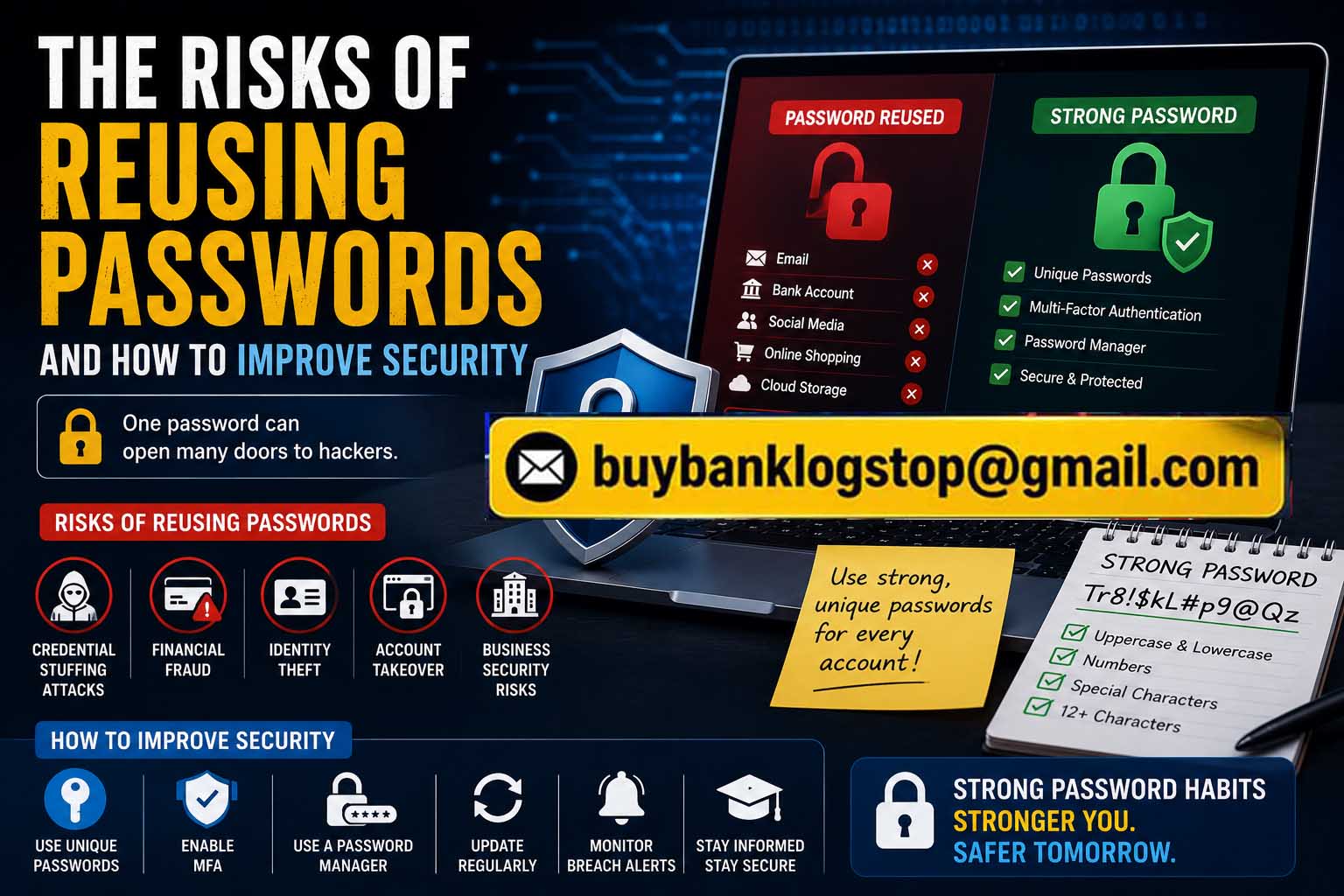

Table of Contents
ToggleThe Risks of Reusing Passwords and How to Improve Security against online bank logins theft
Passwords are the first line of defense for protecting online accounts, financial information, emails, and personal data. However, many people continue to use the same password across multiple websites and apps because it feels convenient and easier to remember.
Unfortunately, password reuse creates a major cybersecurity risk. Once hackers obtain one password, they can potentially access many of your accounts. Understanding the risks of reusing passwords and learning how to improve security can significantly reduce your chances of becoming a victim of cybercrime.
In this guide, we’ll explore why password reuse is dangerous, how attackers exploit weak security habits, and the best strategies for protecting your online accounts.
New Post: Important Online Safety Tips for Using Public Wi-Fi Networks
Why Reusing Passwords Is Dangerous
When you reuse passwords, a single data breach can expose multiple accounts simultaneously.
For example, if hackers steal your password from a shopping website and you use the same password for:
- Email accounts
- Online banking
- Social media
- Work accounts
- Cloud storage
then attackers may gain access to all of them.
This is why cybersecurity experts strongly warn against password reuse.
Common Risks of Reusing Passwords
1. Credential Stuffing Attacks
Credential stuffing is one of the most common cyberattack methods linked to password reuse.
Attackers use automated tools to test stolen usernames and passwords across multiple websites.
If the same login credentials work elsewhere, hackers can quickly compromise additional accounts.
Credential stuffing attacks target:
- Email accounts
- Banking platforms
- Streaming services
- Social media accounts
- Online stores
The risks of reusing passwords become especially serious when sensitive financial or business accounts are involved.
2. Financial Fraud
If cybercriminals gain access to your banking or payment accounts, they may:
- Transfer funds
- Make unauthorized purchases
- Steal credit card information
- Commit identity theft
Reused passwords can expose your entire financial identity.
3. Identity Theft
Hackers often combine stolen passwords with personal information from data breaches.
This information may include:
- Full names
- Phone numbers
- Addresses
- Social Security numbers
- Banking information
Identity theft can lead to long-term financial and legal problems.
4. Business Security Risks
Employees who reuse passwords across personal and work accounts can expose organizations to cyber threats.
A compromised personal account may allow attackers to access:
- Company emails
- Internal systems
- Customer databases
- Cloud storage
- Business applications
Password reuse is a major contributor to corporate data breaches.
5. Account Takeovers
Hackers may fully take control of online accounts and lock legitimate users out.
Compromised accounts are often used for:
- Fraud
- Phishing scams
- Spam campaigns
- Cryptocurrency theft
- Social engineering attacks
How Hackers Obtain Passwords
Understanding how attackers steal passwords helps explain the risks of reusing passwords.
Data Breaches
Hackers steal databases containing usernames and passwords from vulnerable companies.
Millions of leaked credentials are traded online every year.
Phishing Attacks
Fake emails and websites trick users into revealing login credentials.
Malware and Keyloggers
Malicious software can secretly record passwords entered on infected devices.
Public Wi-Fi Attacks
Unsecured networks may expose login information to attackers.
Password Guessing
Weak or predictable passwords are easier for attackers to crack using automated tools.
Signs Your Password May Be Compromised
You may have a compromised password if you notice:
- Unauthorized login attempts
- Password reset emails you didn’t request
- Unusual account activity
- Locked accounts
- Suspicious financial transactions
Act quickly if you suspect an account breach.
Must Read: How to Identify Fake Banking Websites and Protect Your Data
How to Improve Password Security
Use Unique Passwords for Every Account
One of the best ways to reduce the risks of reusing passwords is to create unique passwords for every website and app.
Even if one account is compromised, the others remain protected.
Create Strong Passwords
Strong passwords should include:
- Uppercase letters
- Lowercase letters
- Numbers
- Special characters
Avoid using:
- Birthdays
- Names
- Simple patterns
- Common words
Longer passwords are generally more secure.
Use a Password Manager
Password managers securely store and generate strong passwords.
Benefits include:
- Easier password management
- Unique password generation
- Encrypted storage
- Reduced password reuse
Password managers improve both security and convenience.
Enable Multi-Factor Authentication (MFA)
MFA adds an extra verification step beyond passwords.
Examples include:
- SMS verification codes
- Authentication apps
- Biometric login
- Hardware security keys
Even if attackers steal your password, MFA helps block unauthorized access.
Regularly Update Passwords
Change passwords immediately after:
- Data breaches
- Suspicious activity
- Malware infections
- Shared account access
Avoid reusing old passwords.
Monitor for Data Breaches
Use reputable breach notification services to check whether your credentials have been exposed online.
Early detection can prevent further damage.
Password Security Best Practices for Businesses
Organizations should enforce strong password policies including:
- Unique passwords for employees
- Mandatory MFA
- Password expiration policies
- Employee cybersecurity training
- Access monitoring systems
Businesses face major financial and reputational damage from password-related breaches.
Also Reads: How Social Engineering Manipulates Victims into Sharing Bank Details
Common Password Mistakes to Avoid
Avoid these dangerous habits:
- Reusing passwords
- Sharing passwords through email or text
- Storing passwords in plain text
- Using short passwords
- Ignoring security alerts
Cybercriminals often exploit simple mistakes.
The Role of MFA in Modern Cybersecurity
While strong passwords are important, modern cybersecurity increasingly relies on layered protection.
MFA helps protect against:
- Credential stuffing
- Phishing attacks
- Password theft
- Unauthorized access
Combining MFA with strong password habits provides much stronger security.
Why Password Security Matters More Than Ever
Today, people store massive amounts of personal and financial information online.
Compromised passwords can expose:
- Banking accounts
- Work systems
- Medical records
- Social media profiles
- Cloud storage
- Cryptocurrency wallets
The risks of reusing passwords continue to grow as cyberattacks become more sophisticated.
Final Thoughts
Understanding the risks of reusing passwords is essential for protecting your digital identity and financial security. While reusing passwords may seem convenient, it dramatically increases the chances of account compromise, identity theft, and financial loss.
Using strong, unique passwords along with password managers and multi-factor authentication can significantly improve your online security.
Cybersecurity starts with simple habits. By strengthening your password practices today, you can better protect your personal data, accounts, and online privacy from modern cyber threats.

Sora
Sora is a cybersecurity researcher and fraud prevention advocate specializing in bank logs, carding techniques, and underground cybercrime operations. Passionate about demystifying how scammers work, she delivers clear, practical safety tips to help individuals protect their finances and stay secure online.
Newsletter Updates
Enter your email address below and subscribe to our newsletter